


Japanese looks warm on the page and still trips you up in a morning send. You run a warm English line through a translator and it comes back stiff, and one plain copy gives you the short greeting where an elder needs the full polite form. I learned that while sending dawn lines to a Japanese-speaking friend of our family. My first tries read like a school exercise, and one line used the casual form with a person who should have had the respectful one. A blessing needs exact words, in the right form, with the meaning clear before you press send.
This page holds morning blessings in Japanese in 15 groups, with 123 lines in all. Seven groups are by person: a general set, family, a friend, someone you love, loved ones far away, plus short and heartfelt sets that fit any person. Eight groups are by need: peace and hope, strength, protection and guidance, a new day, gratitude, good health, work and success, and a hard morning. Each group has 8 lines. Each line gives 3 parts: the Japanese wording first, then its romaji so you can read it aloud, then its English meaning, so you can check the sense at a glance and copy the Japanese part as it stands. These lines sit inside the wider set on the Morning Blessings in Different Languages page, which holds blessings in many languages in one place.
What are morning blessings in Japanese?
Morning blessings in Japanese are short lines in Japanese that greet a person at the start of the day and wish them peace, health, strength, or God's blessing. The core greetings are Ohayō gozaimasu in the polite form and Ohayō in the casual form, and a blessed form adds words like shukufuku (blessing) and Kami-sama (God). Pick the group for the person, check the romaji and the English meaning, copy the Japanese line, and send it early.
3 lines you can send now:
- For family: おはようございます、大切な家族!今日、家中に平和と喜びがありますように。 (Ohayō gozaimasu, taisetsu na kazoku! Kyō, kachū ni heiwa to yorokobi ga arimasu yō ni) (Good morning, dear family! May our home be full of peace and joy today.)
- For a friend: おはよう、私の友だち!今日は朝いちばんに良い知らせが届きますように。 (Ohayō, watashi no tomodachi! Kyō wa asa ichiban ni ii shirase ga todokimasu yō ni) (Good morning, my friend! May good news reach you first thing today.)
- For someone you love: おはよう、愛する人。今日の最初の1時間に、温かい言葉と笑顔に出会えますように。 (Ohayō, aisuru hito. Kyō no saisho no ichi-jikan ni, atatakai kotoba to egao ni deaemasu yō ni) (Good morning, my love. May you meet a warm word and a smiling face in the first hour of today.)
Morning blessings in Japanese
This general set greets any person on any plain morning. The lines wish peace, light, and God's blessing in warm, natural Japanese, with no single role or task inside them. Open this group when you need one safe line that fits a family member, a friend, or a kind neighbour.
- おはようございます!神様の祝福があなたの1日を満たし、心に平和がありますように。 (Ohayō gozaimasu! Kami-sama no shukufuku ga anata no ichinichi o mitashi, kokoro ni heiwa ga arimasu yō ni) (Good morning! May God's blessing fill your day and may peace be in your heart.)
- おはようございます!新しい1日の光が、あなたに希望と喜びを運びますように。 (Ohayō gozaimasu! Atarashii ichinichi no hikari ga, anata ni kibō to yorokobi o hakobimasu yō ni) (Good morning! May the light of this new day bring you hope and joy.)
- 祝福に満ちた朝をあなたに。穏やかさと力と愛が今日ずっとそばにありますように。 (Shukufuku ni michita asa o anata ni. Odayakasa to chikara to ai ga kyō zutto soba ni arimasu yō ni) (A morning full of blessing to you. May calm, strength and love stay beside you all day.)
- おはようございます!今日歩む一歩一歩が、神様の守りにありますように。 (Ohayō gozaimasu! Kyō ayumu ippo ippo ga, Kami-sama no mamori ni arimasu yō ni) (Good morning! May every step you walk today be under God's protection.)
- この朝があなたに笑顔を運び、1日が優しく明るくなりますように。 (Kono asa ga anata ni egao o hakobi, ichinichi ga yasashiku akaruku narimasu yō ni) (May this morning bring you a smile, and may your day be gentle and bright.)
- おはようございます!神様が今日、あなたの仕事と家と、歩むすべての道を祝福してくださいますように。 (Ohayō gozaimasu! Kami-sama ga kyō, anata no shigoto to ie to, ayumu subete no michi o shukufuku shite kudasaimasu yō ni) (Good morning! May God bless your work, your home and every road you walk today.)
- 新しい1日が、良い人たちと、澄んだ考えと、落ち着いた心を運びますように。 (Atarashii ichinichi ga, ii hitotachi to, sunda kangae to, ochitsuita kokoro o hakobimasu yō ni) (May the new day bring you good people, clear thoughts and a calm heart.)
- おはようございます!あなたの1日が穏やかに始まり、感謝で終わりますように。 (Ohayō gozaimasu! Anata no ichinichi ga odayaka ni hajimari, kansha de owarimasu yō ni) (Good morning! May your day begin calmly and end with gratitude.)
Short morning blessings in Japanese
A rushed morning leaves no time to read groups. These short lines carry the whole wish in a few Japanese words each, ready to copy and send in one tap. Each line still names a blessing, so a short send does not feel thin.
- おはようございます!神様があなたの1日を祝福してくださいますように。 (Ohayō gozaimasu! Kami-sama ga anata no ichinichi o shukufuku shite kudasaimasu yō ni) (Good morning! May God bless your day.)
- 祝福の朝をあなたに。今日は力に満ちていますように。 (Shukufuku no asa o anata ni. Kyō wa chikara ni michite imasu yō ni) (A blessed morning to you. May today be full of strength.)
- おはようございます!平和があなたの心を満たしますように。 (Ohayō gozaimasu! Heiwa ga anata no kokoro o mitashimasu yō ni) (Good morning! May peace fill your heart.)
- 光と愛と良い1日をあなたに願います。 (Hikari to ai to ii ichinichi o anata ni negaimasu) (I wish you light, love and a good day.)
- おはようございます!今日も健康で、どこへ行っても無事でありますように。 (Ohayō gozaimasu! Kyō mo kenkō de, doko e itte mo buji de arimasu yō ni) (Good morning! May you be healthy today and safe wherever you go.)
- あなたの朝が静かで、心が軽く安らかでありますように。 (Anata no asa ga shizuka de, kokoro ga karuku yasuraka de arimasu yō ni) (May your morning be quiet and your heart light and at ease.)
- おはようございます!今日、喜びも祝福もたっぷりありますように。 (Ohayō gozaimasu! Kyō, yorokobi mo shukufuku mo tappuri arimasu yō ni) (Good morning! May you have plenty of joy and plenty of blessing today.)
- 新しい1日に良い始まりを。心に希望を込めて。 (Atarashii ichinichi ni ii hajimari o. Kokoro ni kibō o komete) (A good start to the new day, with hope in your heart.)
Heartfelt morning blessings in Japanese
A heartfelt line runs warmer than a plain greeting. It tells the person that you thought of them by name at dawn and that your wish comes from a full heart. Lines in this group fit a close family member, a dear friend, and a person who needs to feel held today.
- おはよう、心からの言葉です。私の挨拶が、温かい抱擁のようにあなたに届きますように。 (Ohayō, kokoro kara no kotoba desu. Watashi no aisatsu ga, atatakai hōyō no yō ni anata ni todokimasu yō ni) (Good morning, these words are from my heart. May my greeting reach you like a warm hug.)
- 今朝あなたのことを思いました。1日のどの瞬間にも平和がありますように。 (Kesa anata no koto o omoimashita. Ichinichi no dono shunkan ni mo heiwa ga arimasu yō ni) (I thought of you this morning. May peace be in every moment of your day.)
- おはようございます!今日のどの時間にも、愛され、大切にされていると感じられますように。 (Ohayō gozaimasu! Kyō no dono jikan ni mo, aisare, taisetsu ni sarete iru to kanjiraremasu yō ni) (Good morning! May you feel loved and valued in every hour of today.)
- この1日が小さな喜びを運び、夜まであなたの心を温めますように。 (Kono ichinichi ga chiisana yorokobi o hakobi, yoru made anata no kokoro o atatamemasu yō ni) (May this day bring you small joys that warm your heart until night.)
- おはようございます!あなたの朝が静けさから始まり、笑顔を運びますように。 (Ohayō gozaimasu! Anata no asa ga shizukesa kara hajimari, egao o hakobimasu yō ni) (Good morning! May your morning begin in quiet and bring you a smile.)
- 神様の愛が今朝あなたを包み、1日中そばにいてくださいますように。 (Kami-sama no ai ga kesa anata o tsutsumi, ichinichijū soba ni ite kudasaimasu yō ni) (May God's love wrap around you this morning and stay beside you all day.)
- おはようございます!離れていても、私の心はいつもあなたのそばにあります。良い1日を。 (Ohayō gozaimasu! Hanarete ite mo, watashi no kokoro wa itsumo anata no soba ni arimasu. Ii ichinichi o) (Good morning! Even when we are apart, my heart is always beside you. Have a good day.)
- あなたの名前を思いながらこの言葉を送ります。今朝、あなたが一番に思い浮かんだ人です。 (Anata no namae o omoi nagara kono kotoba o okurimasu. Kesa, anata ga ichiban ni omoiukanda hito desu) (I send these words while thinking of your name. You are the first person who came to mind this morning.)
Morning blessings in Japanese for family
Family lines greet the whole house at once and name the people inside it: okāsan (Mom), otōsan (Dad), a child, a grandmother and a grandfather. The lines for parents and grandparents use the full polite greeting, the way a Japanese family send does, and the child's line uses the short warm form. Lines in this group fit a family group chat and a note on the kitchen table.
- おはようございます、家族のみんな!神様が私たちの家を守り、今日も食卓に笑顔がありますように。 (Ohayō gozaimasu, kazoku no minna! Kami-sama ga watashitachi no ie o mamori, kyō mo shokutaku ni egao ga arimasu yō ni) (Good morning, everyone in the family! May God protect our home, and may there be smiles at the table again today.)
- お母さん、おはようございます。今日は体が楽で、心が穏やかでありますように。 (Okāsan, ohayō gozaimasu. Kyō wa karada ga raku de, kokoro ga odayaka de arimasu yō ni) (Mom, good morning. May your body feel at ease today and your heart be calm.)
- お父さん、おはようございます。今日の仕事が順調で、夕方には疲れが軽くなっていますように。 (Otōsan, ohayō gozaimasu. Kyō no shigoto ga junchō de, yūgata ni wa tsukare ga karuku natte imasu yō ni) (Dad, good morning. May your work go smoothly today, and may your tiredness feel lighter by evening.)
- おはよう、わが子!今日の学校が楽しく、友だちと優しい時間を過ごせますように。 (Ohayō, waga ko! Kyō no gakkō ga tanoshiku, tomodachi to yasashii jikan o sugosemasu yō ni) (Good morning, my child! May school be fun today, and may you spend kind time with your friends.)
- おはようございます、家族のみんな!今日は全員が健康で、無事に家へ帰れますように。 (Ohayō gozaimasu, kazoku no minna! Kyō wa zen'in ga kenkō de, buji ni ie e kaeremasu yō ni) (Good morning, everyone in the family! May everyone be healthy today and come home safely.)
- おばあちゃん、おはようございます。今朝の光のように、あなたの1日が温かく明るくなりますように。 (Obāchan, ohayō gozaimasu. Kesa no hikari no yō ni, anata no ichinichi ga atatakaku akaruku narimasu yō ni) (Grandma, good morning. May your day be warm and bright, like this morning light.)
- おじいちゃん、おはようございます。今日も足取りがしっかりして、庭の空気を楽しめますように。 (Ojīchan, ohayō gozaimasu. Kyō mo ashitori ga shikkari shite, niwa no kūki o tanoshimemasu yō ni) (Grandpa, good morning. May your steps be steady again today, and may you enjoy the garden air.)
- おはようございます、家族のみんな!今日、家の中で誰かが誰かに優しい一言をかけられますように。 (Ohayō gozaimasu, kazoku no minna! Kyō, ie no naka de dareka ga dareka ni yasashii hitokoto o kakeraremasu yō ni) (Good morning, everyone in the family! May someone in this house speak one kind word to someone today.)
Morning blessings in Japanese for a friend
A friend takes the short greeting, Ohayō, in most lines here, the form close people use with each other in Japan. One line keeps the full polite form for a friend you respect at work. The lines wish a light start, fair work, and one warm word early, the things a friend can use on a plain weekday.
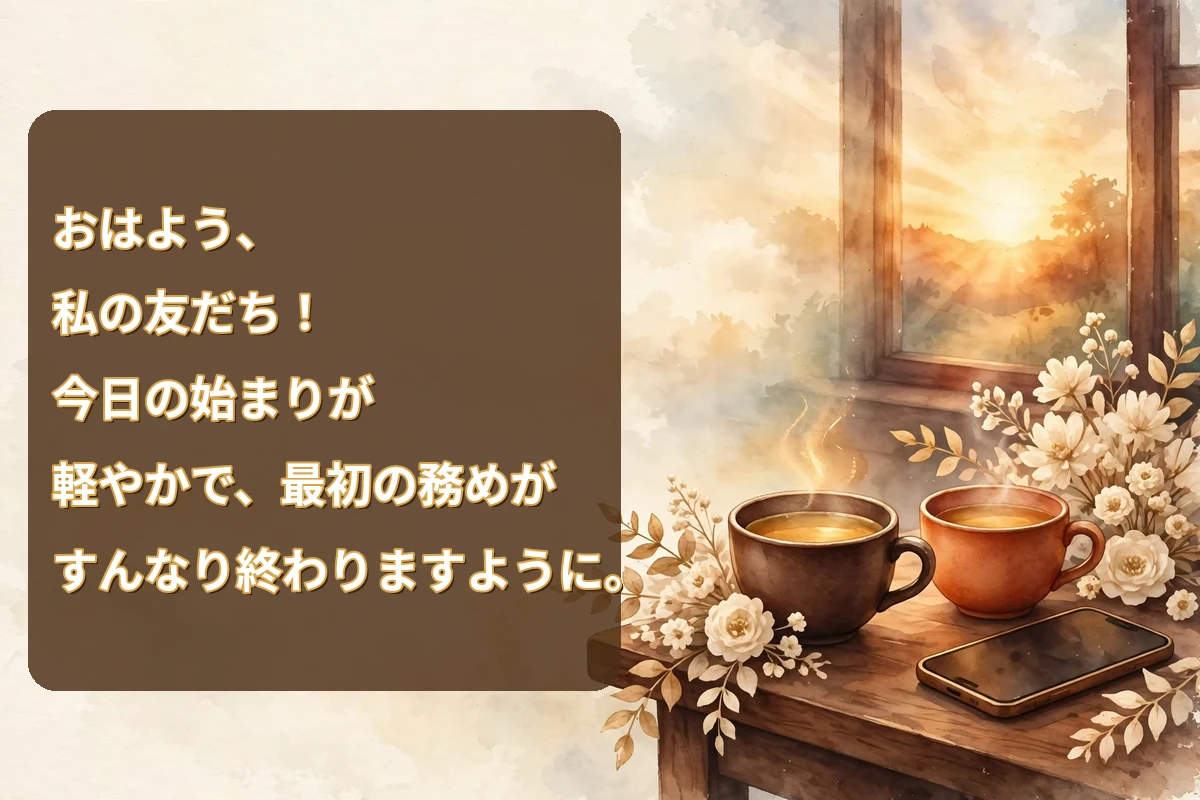
- おはよう、私の友だち!今日の始まりが軽やかで、最初の務めがすんなり終わりますように。 (Ohayō, watashi no tomodachi! Kyō no hajimari ga karoyaka de, saisho no tsutome ga sunnari owarimasu yō ni) (Good morning, my friend! May your start today be light, and may your first duty finish smoothly.)
- おはようございます、友よ。今日の仕事が順調で、上司からも良い言葉をもらえますように。 (Ohayō gozaimasu, tomo yo. Kyō no shigoto ga junchō de, jōshi kara mo ii kotoba o moraemasu yō ni) (Good morning, my friend. May your work go smoothly today, and may you get a good word from your boss too.)
- おはよう!昨夜はよく眠れた顔で、今日を元気に始められますように。 (Ohayō! Sakuya wa yoku nemureta kao de, kyō o genki ni hajimeraremasu yō ni) (Good morning! May you start today full of energy, with the face of someone who slept well last night.)
- おはようございます、友だち。今日の務めが軽く済み、夕方には自分の時間が残りますように。 (Ohayō gozaimasu, tomodachi. Kyō no tsutome ga karuku sumi, yūgata ni wa jibun no jikan ga nokorimasu yō ni) (Good morning, friend. May today's duties finish lightly, and may you have time left for yourself in the evening.)
- おはよう、私の友だち!今日、あなたの笑顔が誰かの一日を明るくしますように。 (Ohayō, watashi no tomodachi! Kyō, anata no egao ga dareka no ichinichi o akaruku shimasu yō ni) (Good morning, my friend! May your smile brighten someone's day today.)
- おはようございます!友よ、今日の道中が無事で、帰り道も穏やかでありますように。 (Ohayō gozaimasu! Tomo yo, kyō no dōchū ga buji de, kaerimichi mo odayaka de arimasu yō ni) (Good morning! My friend, may your journey today be safe, and may the way home be calm too.)
- おはよう、友だち!今日は小さな成功がひとつ、あなたのもとに来ますように。 (Ohayō, tomodachi! Kyō wa chiisana seikō ga hitotsu, anata no moto ni kimasu yō ni) (Good morning, friend! May one small success come to you today.)
- おはようございます、私の友だち。忙しい1日でも、お昼には温かい食事と短い休みがありますように。 (Ohayō gozaimasu, watashi no tomodachi. Isogashii ichinichi demo, ohiru ni wa atatakai shokuji to mijikai yasumi ga arimasu yō ni) (Good morning, my friend. Even on a busy day, may you have a warm meal and a short rest at noon.)
Morning blessings in Japanese for someone you love
The first message of the day often goes to the person you love. Japanese love words are soft ones: aisuru hito (the person I love), itoshii hito (dear one) and taisetsu na hito (precious one). Lines in this group use those words and wish a gentle start, kind people, and a safe road home.
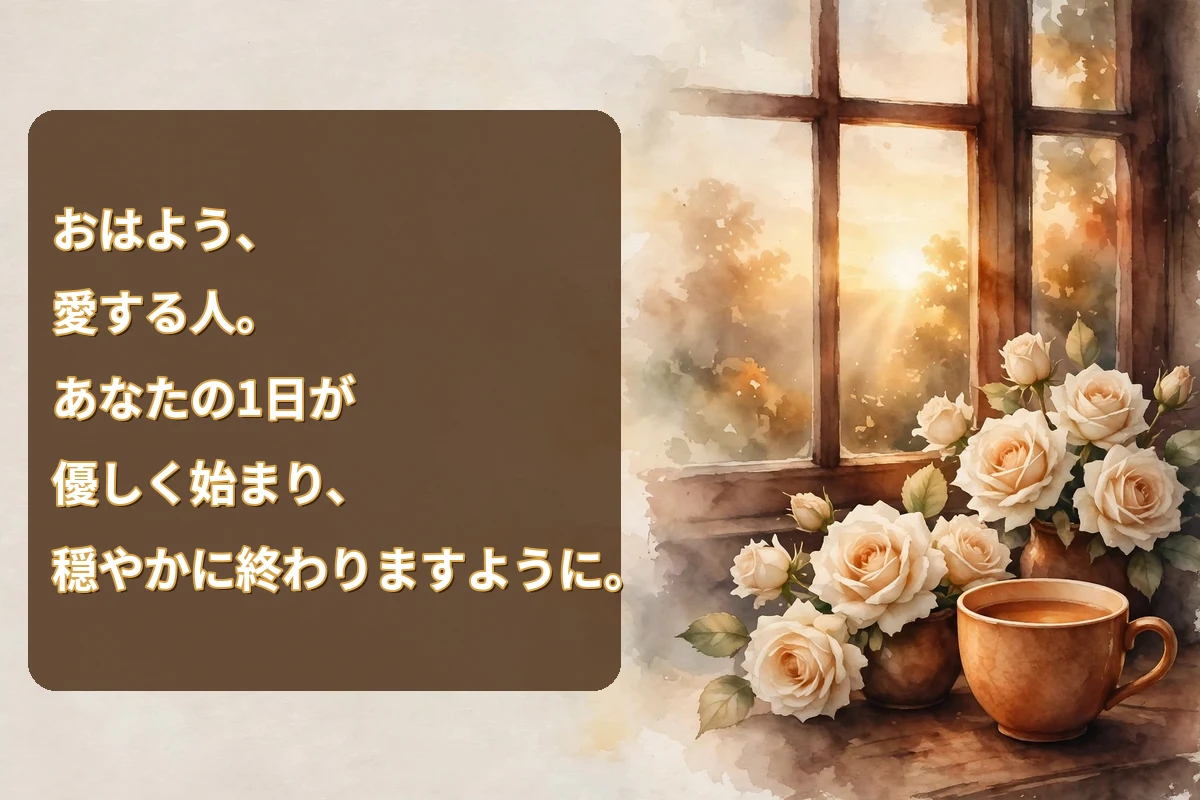
- おはよう、愛する人。あなたの1日が優しく始まり、穏やかに終わりますように。 (Ohayō, aisuru hito. Anata no ichinichi ga yasashiku hajimari, odayaka ni owarimasu yō ni) (Good morning, my love. May your day begin gently and end calmly.)
- おはようございます、愛しい人。今日、あなたの周りに優しい人たちが集まりますように。 (Ohayō gozaimasu, itoshii hito. Kyō, anata no mawari ni yasashii hitotachi ga atsumarimasu yō ni) (Good morning, dear one. May kind people gather around you today.)
- おはよう、大切な人。あなたの手を取るように、今日の幸運がそっとそばに来ますように。 (Ohayō, taisetsu na hito. Anata no te o toru yō ni, kyō no kōun ga sotto soba ni kimasu yō ni) (Good morning, precious one. May today's good fortune come quietly to your side, as if taking your hand.)
- おはよう、愛する人。今朝の最初の光が、あなたへの私の愛を伝えますように。 (Ohayō, aisuru hito. Kesa no saisho no hikari ga, anata e no watashi no ai o tsutaemasu yō ni) (Good morning, my love. May this morning's first light carry my love to you.)
- おはようございます、私の愛する人。今日の道が安全で、夕方には無事に私のもとへ帰れますように。 (Ohayō gozaimasu, watashi no aisuru hito. Kyō no michi ga anzen de, yūgata ni wa buji ni watashi no moto e kaeremasu yō ni) (Good morning, my beloved. May your road today be safe, and may you return to me safely in the evening.)
- おはよう、愛しい人。今日、あなたの心が温かい言葉でいっぱいになりますように。 (Ohayō, itoshii hito. Kyō, anata no kokoro ga atatakai kotoba de ippai ni narimasu yō ni) (Good morning, dear one. May your heart be filled with warm words today.)
- おはようございます、愛する人。忙しい日でも、あなたの笑顔が消えませんように。 (Ohayō gozaimasu, aisuru hito. Isogashii hi demo, anata no egao ga kiemasen yō ni) (Good morning, my love. Even on a busy day, may your smile never fade.)
- おはよう、大切な人。今日のすべての時間が、あなたに優しくありますように。 (Ohayō, taisetsu na hito. Kyō no subete no jikan ga, anata ni yasashiku arimasu yō ni) (Good morning, precious one. May every hour of today be kind to you.)
Morning blessings in Japanese for loved ones far away
Loved ones far away wake in a different town, and a line in their own language crosses the miles with a piece of home inside it. One line in this group names jisa, the time difference, because a dawn send can land in another hour of their day. Lines in this group fit family in another city, a friend who moved this year, and a partner away for work.
- おはようございます、遠くのあなた。距離があっても、この挨拶が家の温かさを運びますように。 (Ohayō gozaimasu, tōku no anata. Kyori ga atte mo, kono aisatsu ga ie no atatakasa o hakobimasu yō ni) (Good morning, you who are far away. Even with the distance, may this greeting carry the warmth of home.)
- おはよう、遠くに住む家族。そちらの朝も、こちらの朝と同じ光で明るくなりますように。 (Ohayō, tōku ni sumu kazoku. Sochira no asa mo, kochira no asa to onaji hikari de akaruku narimasu yō ni) (Good morning, family living far away. May your morning there be bright with the same light as our morning here.)
- おはようございます、遠くの友よ。新しい町の1日が、あなたに優しい人と良い知らせを運びますように。 (Ohayō gozaimasu, tōku no tomo yo. Atarashii machi no ichinichi ga, anata ni yasashii hito to ii shirase o hakobimasu yō ni) (Good morning, my friend far away. May a day in your new town bring you a kind person and good news.)
- おはよう、遠くで働くあなた。今日の務めが無事に終わり、夜にはゆっくり休めますように。 (Ohayō, tōku de hataraku anata. Kyō no tsutome ga buji ni owari, yoru ni wa yukkuri yasumemasu yō ni) (Good morning, you who work far away. May today's duties end safely, and may you rest well at night.)
- おはようございます、遠くの大切な人。故郷を恋しく思う朝でも、心に平和がありますように。 (Ohayō gozaimasu, tōku no taisetsu na hito. Furusato o koishiku omou asa demo, kokoro ni heiwa ga arimasu yō ni) (Good morning, precious one far away. Even on a morning when you miss home, may peace be in your heart.)
- おはよう、遠くにいる愛する人。時差があっても、私の思いは今朝あなたのもとに届いています。 (Ohayō, tōku ni iru aisuru hito. Jisa ga atte mo, watashi no omoi wa kesa anata no moto ni todoite imasu) (Good morning, my love who is far away. Even with the time difference, my thoughts reach you this morning.)
- おはようございます、遠くの家族。次に会える日まで、みんなが健康で無事でありますように。 (Ohayō gozaimasu, tōku no kazoku. Tsugi ni aeru hi made, minna ga kenkō de buji de arimasu yō ni) (Good morning, family far away. Until the day we meet again, may everyone stay healthy and safe.)
- おはよう、遠くに住む友だち。今日、そちらの空の下で、あなたを笑顔にする出来事がありますように。 (Ohayō, tōku ni sumu tomodachi. Kyō, sochira no sora no shita de, anata o egao ni suru dekigoto ga arimasu yō ni) (Good morning, friend living far away. May something happen under your sky today that makes you smile.)
Morning blessings in Japanese for peace and hope
A morning can start loud inside the head: a full list, a wait for news, a worry that woke early. The Japanese words for this wish are heiwa (peace) and kibō (hope). Lines in this group wish a calm mind first, then hope that holds till night.
- おはようございます。今朝は心が静まりますように。忙しい思いが、ひとつずつ落ち着きますように。 (Ohayō gozaimasu. Kesa wa kokoro ga shizumarimasu yō ni. Isogashii omoi ga, hitotsu zutsu ochitsukimasu yō ni) (Good morning. May your heart grow quiet this morning. May your busy thoughts settle, one by one.)
- おはようございます!平和があなたの家を満たし、希望が夕方まで心に残りますように。 (Ohayō gozaimasu! Heiwa ga anata no ie o mitashi, kibō ga yūgata made kokoro ni nokorimasu yō ni) (Good morning! May peace fill your home, and may hope stay in your heart until evening.)
- おはよう、心配の多い朝のあなた。深く息をして、今日は一歩ずつで十分だと心が知りますように。 (Ohayō, shinpai no ōi asa no anata. Fukaku iki o shite, kyō wa ippo zutsu de jūbun da to kokoro ga shirimasu yō ni) (Good morning, you on a morning full of worry. May you breathe deeply, and may your heart know that one step at a time is enough today.)
- おはようございます。知らせを待つ朝でも、希望が静かにそばに座っていますように。 (Ohayō gozaimasu. Shirase o matsu asa demo, kibō ga shizuka ni soba ni suwatte imasu yō ni) (Good morning. Even on a morning of waiting for news, may hope sit quietly beside you.)
- おはようございます!今日は心のペースがゆっくりになり、穏やかな時間が長く続きますように。 (Ohayō gozaimasu! Kyō wa kokoro no pēsu ga yukkuri ni nari, odayaka na jikan ga nagaku tsuzukimasu yō ni) (Good morning! May the pace of your heart slow down today, and may calm time last long.)
- おはよう、今朝早く目覚めたあなた。窓の光が、今日への希望をそっと運びますように。 (Ohayō, kesa hayaku mezameta anata. Mado no hikari ga, kyō e no kibō o sotto hakobimasu yō ni) (Good morning, you who woke early this morning. May the light at the window quietly carry hope for today.)
- おはようございます。昨日の重さが今朝は軽くなり、心に新しい平和が入りますように。 (Ohayō gozaimasu. Kinō no omosa ga kesa wa karuku nari, kokoro ni atarashii heiwa ga hairimasu yō ni) (Good morning. May yesterday's heaviness feel lighter this morning, and may new peace enter your heart.)
- おはようございます!今日、あなたの心が静かな水のように澄んで、希望の光を映しますように。 (Ohayō gozaimasu! Kyō, anata no kokoro ga shizuka na mizu no yō ni sunde, kibō no hikari o utushimasu yō ni) (Good morning! May your heart be clear like quiet water today, reflecting the light of hope.)
Morning blessings in Japanese for strength and encouragement
A new day can ask a lot in its first hour: a big task, an exam, a first day in a new job. The Japanese word is chikara (strength), with yūki (courage) beside it. Lines in this group wish energy, courage, and steady hands for the work ahead.
- おはようございます!今日の大きな務めの前に、体に力と心に勇気が湧きますように。 (Ohayō gozaimasu! Kyō no ōkina tsutome no mae ni, karada ni chikara to kokoro ni yūki ga wakimasu yō ni) (Good morning! Before today's big task, may strength rise in your body and courage in your heart.)
- おはよう、試験の日のあなた。学んだことが静かに思い出せて、手が震えずに進めますように。 (Ohayō, shiken no hi no anata. Mananda koto ga shizuka ni omoidasete, te ga furuezu ni susumemasu yō ni) (Good morning, you on exam day. May what you learned come back to you calmly, and may you go on with steady hands.)
- おはようございます!新しい仕事の初日、足取りがしっかりして、声が落ち着いて出ますように。 (Ohayō gozaimasu! Atarashii shigoto no shonichi, ashitori ga shikkari shite, koe ga ochitsuite demasu yō ni) (Good morning! On your first day at a new job, may your steps be steady and your voice come out calm.)
- おはよう、頑張るあなた。今日の努力が、夕方には小さな誇りになりますように。 (Ohayō, ganbaru anata. Kyō no doryoku ga, yūgata ni wa chiisana hokori ni narimasu yō ni) (Good morning, you who are working hard. May today's effort become a small pride by evening.)
- おはようございます!疲れた朝でも、最初の一杯のお茶とともに力が戻りますように。 (Ohayō gozaimasu! Tsukareta asa demo, saisho no ippai no ocha to tomo ni chikara ga modorimasu yō ni) (Good morning! Even on a tired morning, may your strength return with the first cup of tea.)
- おはよう、チームを引くあなた。今日、言葉がはっきり伝わり、仲間が心を合わせて進めますように。 (Ohayō, chīmu o hiku anata. Kyō, kotoba ga hakkiri tsutawari, nakama ga kokoro o awasete susumemasu yō ni) (Good morning, you who lead a team. May your words carry clearly today, and may your team move forward with one heart.)
- おはようございます!難しい決めごとの朝、頭が澄んで、正しい道が見えますように。 (Ohayō gozaimasu! Muzukashii kimegoto no asa, atama ga sunde, tadashii michi ga miemasu yō ni) (Good morning! On a morning with a hard decision, may your head be clear and may you see the right road.)
- おはよう、挑戦するあなた。怖さよりも一歩先に、勇気がそっと立っていますように。 (Ohayō, chōsen suru anata. Kowasa yori mo ippo saki ni, yūki ga sotto tatte imasu yō ni) (Good morning, you who take on a challenge. May courage stand quietly one step ahead of your fear.)
Morning blessings in Japanese for protection and guidance
A protection line wishes the person safe on every road of the day. The Japanese words are mamori (protection) and michibiki (guidance), with chie (wisdom) for the day's choices. Lines in this group fit a person who travels, a child on the school road, and anyone who starts the day far from home.
- おはようございます!今日のすべての道で、神様の守りがあなたの前にも後ろにもありますように。 (Ohayō gozaimasu! Kyō no subete no michi de, Kami-sama no mamori ga anata no mae ni mo ushiro ni mo arimasu yō ni) (Good morning! On every road today, may God's protection be before you and behind you.)
- おはようございます、旅に出るあなた。道中が無事で、夕方には安全な場所に着けますように。 (Ohayō gozaimasu, tabi ni deru anata. Dōchū ga buji de, yūgata ni wa anzen na basho ni tsukemasu yō ni) (Good morning, you who set out on a trip. May the journey be safe, and may you arrive at a safe place by evening.)
- おはよう、学校へ行く子。通学路が安全で、先生の言葉が優しく届きますように。 (Ohayō, gakkō e iku ko. Tsūgakuro ga anzen de, sensei no kotoba ga yasashiku todokimasu yō ni) (Good morning, child going to school. May the road to school be safe, and may your teacher's words reach you kindly.)
- おはようございます!今日の選択のたびに、知恵がそばにいて、正しい方へ導きますように。 (Ohayō gozaimasu! Kyō no sentaku no tabi ni, chie ga soba ni ite, tadashii hō e michibikimasu yō ni) (Good morning! At every choice today, may wisdom stay beside you and guide you the right way.)
- おはよう、遠くへ出るあなた。家を出る一歩から帰る一歩まで、守りが途切れませんように。 (Ohayō, tōku e deru anata. Ie o deru ippo kara kaeru ippo made, mamori ga togiremasen yō ni) (Good morning, you who go far away. From the step out of the house to the step back home, may protection never break.)
- おはようございます!雨の朝でも足元が確かで、傘の下まで平和が届きますように。 (Ohayō gozaimasu! Ame no asa demo ashimoto ga tashika de, kasa no shita made heiwa ga todokimasu yō ni) (Good morning! Even on a rainy morning, may your footing be sure, and may peace reach even under your umbrella.)
- おはよう、夜勤明けのあなた。帰り道が安全で、家に着いたら深く眠れますように。 (Ohayō, yakin ake no anata. Kaerimichi ga anzen de, ie ni tsuitara fukaku nemuremasu yō ni) (Good morning, you coming off a night shift. May the road home be safe, and may you sleep deeply once you are home.)
- おはようございます!今日、危ない場面から遠ざかり、良い人たちの輪の中にいられますように。 (Ohayō gozaimasu! Kyō, abunai bamen kara tōzakari, ii hitotachi no wa no naka ni iraremasu yō ni) (Good morning! May you stay far from dangerous moments today, and may you be inside a circle of good people.)
Morning blessings in Japanese for a new day
A new day line greets the day itself: first light, a clean page, new chances. The Japanese phrase is atarashii ichinichi, and these lines use it with hope for the hours ahead. Open this group on a first day, a fresh start, or a plain morning that needs a bright first word.
- おはようございます!新しい1日が真っ白な紙のように開き、最初の行を希望で書けますように。 (Ohayō gozaimasu! Atarashii ichinichi ga masshiro na kami no yō ni hiraki, saisho no gyō o kibō de kakemasu yō ni) (Good morning! May the new day open like a clean white page, and may you write its first line with hope.)
- おはよう、新しい始まりの朝。過去の重さを玄関に置いて、軽い心で出発できますように。 (Ohayō, atarashii hajimari no asa. Kako no omosa o genkan ni oite, karui kokoro de shuppatsu dekimasu yō ni) (Good morning, morning of a new beginning. May you leave the weight of the past at the doorway and set out with a light heart.)
- おはようございます!今日は新しい機会がひとつ、静かにあなたの前に現れますように。 (Ohayō gozaimasu! Kyō wa atarashii kikai ga hitotsu, shizuka ni anata no mae ni arawaremasu yō ni) (Good morning! May one new chance appear quietly before you today.)
- おはよう、初日の朝のあなた。緊張の中にも、小さな楽しみが混ざっていますように。 (Ohayō, shonichi no asa no anata. Kinchō no naka ni mo, chiisana tanoshimi ga mazatte imasu yō ni) (Good morning, you on the morning of a first day. Even inside the nerves, may a small joy be mixed in.)
- おはようございます!今朝の光が、新しい1日の合図として、あなたの部屋を明るく満たしますように。 (Ohayō gozaimasu! Kesa no hikari ga, atarashii ichinichi no aizu to shite, anata no heya o akaruku mitashimasu yō ni) (Good morning! May this morning's light fill your room brightly, as the signal of a new day.)
- おはよう、新しい週の始まり。今週の計画が穏やかに並び、無理のないペースで進めますように。 (Ohayō, atarashii shū no hajimari. Konshū no keikaku ga odayaka ni narabi, muri no nai pēsu de susumemasu yō ni) (Good morning, start of a new week. May this week's plans line up calmly, and may you move at a pace that is not forced.)
- おはようございます!今日から始める小さな習慣が、静かに根を張って育ちますように。 (Ohayō gozaimasu! Kyō kara hajimeru chiisana shūkan ga, shizuka ni ne o hatte sodachimasu yō ni) (Good morning! May the small habit you start today quietly take root and grow.)
- おはよう、新しい季節の朝。変わる空気の中に、あなたへの良い変化も含まれていますように。 (Ohayō, atarashii kisetsu no asa. Kawaru kūki no naka ni, anata e no ii henka mo fukumarete imasu yō ni) (Good morning, morning of a new season. Inside the changing air, may a good change for you be included too.)
Morning blessings in Japanese with gratitude
A gratitude line names the gifts of one plain morning: light, breath, food, home, and the people at the table. The Japanese word is kansha (gratitude), and the thank-you word is arigatō. Lines in this group fit any person and pair well with a family send.
- おはようございます。今朝の光と息と、食卓の食べ物に感謝できる心がありますように。 (Ohayō gozaimasu. Kesa no hikari to iki to, shokutaku no tabemono ni kansha dekiru kokoro ga arimasu yō ni) (Good morning. May you have a heart that can thank this morning's light, your breath, and the food on the table.)
- おはようございます!昨夜の眠りへの感謝で朝が始まり、今日への希望で続きますように。 (Ohayō gozaimasu! Sakuya no nemuri e no kansha de asa ga hajimari, kyō e no kibō de tsuzukimasu yō ni) (Good morning! May the morning begin with thanks for last night's sleep, and continue with hope for today.)
- おはよう、家族とともに朝を迎えるあなた。当たり前の顔ぶれが、今日は特別にありがたく感じられますように。 (Ohayō, kazoku to tomo ni asa o mukaeru anata. Atarimae no kaobure ga, kyō wa tokubetsu ni arigataku kanjiraremasu yō ni) (Good morning, you who greet the morning with family. May the familiar faces feel especially precious today.)
- おはようございます。小さな贈り物のような朝です。鳥の声、温かいお茶、静かな部屋に感謝が湧きますように。 (Ohayō gozaimasu. Chiisana okurimono no yō na asa desu. Tori no koe, atatakai ocha, shizuka na heya ni kansha ga wakimasu yō ni) (Good morning. This morning is like a small gift. May thanks rise for the birds' voices, the warm tea and the quiet room.)
- おはようございます!今日、誰かの優しさに気づいて、ありがとうと声に出して言えますように。 (Ohayō gozaimasu! Kyō, dareka no yasashisa ni kizuite, arigatō to koe ni dashite iemasu yō ni) (Good morning! May you notice someone's kindness today, and say thank you out loud.)
- おはよう、雨上がりの朝。濡れた道と澄んだ空気に、昨日の心配が洗い流された感謝がありますように。 (Ohayō, ameagari no asa. Nureta michi to sunda kūki ni, kinō no shinpai ga arainagasareta kansha ga arimasu yō ni) (Good morning, morning after rain. In the wet road and clear air, may there be thanks that yesterday's worries were washed away.)
- おはようございます。健康な体で迎えた今朝に感謝し、今日の務めを丁寧に始められますように。 (Ohayō gozaimasu. Kenkō na karada de mukaeta kesa ni kansha shi, kyō no tsutome o teinei ni hajimeraremasu yō ni) (Good morning. May you thank this morning met in a healthy body, and begin today's duties with care.)
- おはようございます!感謝の言葉で始めた朝が、夕方まで温かい気持ちを運びますように。 (Ohayō gozaimasu! Kansha no kotoba de hajimeta asa ga, yūgata made atatakai kimochi o hakobimasu yō ni) (Good morning! May a morning begun with words of thanks carry a warm feeling until evening.)
Morning blessings in Japanese for good health
A health line wishes the body well for the day ahead. The Japanese word is kenkō (health), a warm wish word in a morning line. Lines in this group fit an older parent, a person who woke up weak, and anyone in a sick week.
- おはようございます!今日は体が軽く、頭が澄んで、朝の光を気持ちよく感じられますように。 (Ohayō gozaimasu! Kyō wa karada ga karuku, atama ga sunde, asa no hikari o kimochi yoku kanjiraremasu yō ni) (Good morning! May your body feel light today, your head clear, and the morning light pleasant.)
- おはよう、弱った体で起きたあなた。今朝は無理をせず、温かい食事と休みが先に来ますように。 (Ohayō, yowatta karada de okita anata. Kesa wa muri o sezu, atatakai shokuji to yasumi ga saki ni kimasu yō ni) (Good morning, you who woke with a weak body. May you not push yourself this morning, and may a warm meal and rest come first.)
- おはようございます、お父さんお母さん。今朝も血圧が穏やかで、足取りがしっかりしていますように。 (Ohayō gozaimasu, otōsan okāsan. Kesa mo ketsuatsu ga odayaka de, ashitori ga shikkari shite imasu yō ni) (Good morning, Dad and Mom. May your blood pressure be calm again this morning, and your steps steady.)
- おはようございます!今日は水をよく飲み、体が静かに回復する時間が持てますように。 (Ohayō gozaimasu! Kyō wa mizu o yoku nomi, karada ga shizuka ni kaifuku suru jikan ga motemasu yō ni) (Good morning! May you drink plenty of water today, and have time for your body to recover quietly.)
- おはよう、病気の週のあなた。今朝は昨日より少し楽で、笑顔が戻る兆しがありますように。 (Ohayō, byōki no shū no anata. Kesa wa kinō yori sukoshi raku de, egao ga modoru kizashi ga arimasu yō ni) (Good morning, you in a week of illness. May this morning feel a little easier than yesterday, with a sign of your smile returning.)
- おはようございます!朝の深呼吸が胸いっぱいに広がり、1日の元気を体に運びますように。 (Ohayō gozaimasu! Asa no shinkokyū ga mune ippai ni hirogari, ichinichi no genki o karada ni hakobimasu yō ni) (Good morning! May a deep morning breath spread through your chest and carry energy for the day into your body.)
- おはよう、年配の大切な人。今朝の痛みが和らぎ、椅子から立つ動作が楽でありますように。 (Ohayō, nenpai no taisetsu na hito. Kesa no itami ga yawaragi, isu kara tatsu dōsa ga raku de arimasu yō ni) (Good morning, dear elder. May this morning's pain ease, and may standing up from your chair feel easy.)
- おはようございます!今日はよく食べ、よく歩き、夜にはぐっすり眠れる体でありますように。 (Ohayō gozaimasu! Kyō wa yoku tabe, yoku aruki, yoru ni wa gussuri nemureru karada de arimasu yō ni) (Good morning! May you eat well, walk well today, and have a body that sleeps soundly at night.)
Morning blessings in Japanese for work and success
A work line wishes a fair day at the desk, in the shop, or on the road. The Japanese words are shigoto (work), junchō (smooth, going well) and seika (a result). Lines in this group fit a spouse on a big work day, a friend with an exam result due, and a workmate at the start of a shift.
- おはようございます!今日の会議で言葉がはっきり伝わり、良い結果が静かに決まりますように。 (Ohayō gozaimasu! Kyō no kaigi de kotoba ga hakkiri tsutawari, ii kekka ga shizuka ni kimarimasu yō ni) (Good morning! May your words carry clearly in today's meeting, and may a good result be settled quietly.)
- おはよう、店を開けるあなた。今朝の最初のお客さんが笑顔で、1日の商いが順調に始まりますように。 (Ohayō, mise o akeru anata. Kesa no saisho no okyaku-san ga egao de, ichinichi no akinai ga junchō ni hajimarimasu yō ni) (Good morning, you who open a shop. May this morning's first customer smile, and may the day's trade begin smoothly.)
- おはようございます!今日の務めが順調に進み、夕方にはやり切った気持ちで家路につけますように。 (Ohayō gozaimasu! Kyō no tsutome ga junchō ni susumi, yūgata ni wa yarikitta kimochi de ieji ni tsukemasu yō ni) (Good morning! May today's duties move smoothly, and may you head home in the evening feeling you finished well.)
- おはよう、結果を待つあなた。今朝、良い知らせの電話が鳴りますように。 (Ohayō, kekka o matsu anata. Kesa, ii shirase no denwa ga narimasu yō ni) (Good morning, you who wait for a result. May the phone ring this morning with good news.)
- おはようございます、働く友よ。今日の努力が上司の目に留まり、正しく認められますように。 (Ohayō gozaimasu, hataraku tomo yo. Kyō no doryoku ga jōshi no me ni tomari, tadashiku mitomeraremasu yō ni) (Good morning, my working friend. May today's effort catch your boss's eye and be rightly valued.)
- おはよう、畑や現場へ出るあなた。今朝の空が穏やかで、作業が安全に進みますように。 (Ohayō, hatake ya genba e deru anata. Kesa no sora ga odayaka de, sagyō ga anzen ni susumimasu yō ni) (Good morning, you who go out to the fields or the work site. May this morning's sky be calm, and may the work go forward safely.)
- おはようございます!今日は小さな一歩が成果につながり、週の終わりに自信が残りますように。 (Ohayō gozaimasu! Kyō wa chiisana ippo ga seika ni tsunagari, shū no owari ni jishin ga nokorimasu yō ni) (Good morning! May a small step today lead to a result, and may confidence remain at the end of the week.)
- おはよう、朝の当番のあなた。最初の務めが丁寧に終わり、仲間からありがとうをもらえますように。 (Ohayō, asa no tōban no anata. Saisho no tsutome ga teinei ni owari, nakama kara arigatō o moraemasu yō ni) (Good morning, you on the morning shift. May your first duty end with care, and may you receive a thank you from your team.)
Morning blessings in Japanese on a hard morning
A hard morning starts heavy: worry at dawn, a wait for news, a tired heart at the table. A Japanese line for that morning stays soft and firm, and names one small calm thing first. Lines in this group fit a family member, a friend, or your own first read of the day.
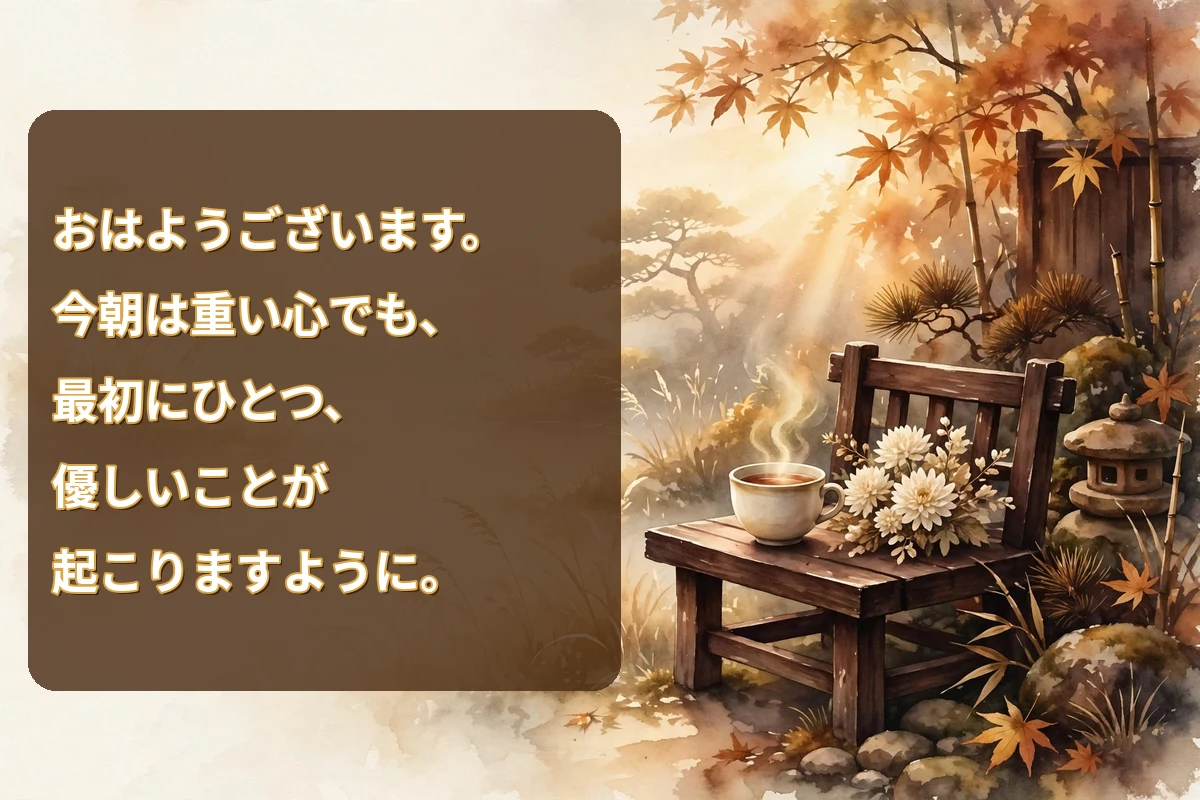
- おはようございます。今朝は重い心でも、最初にひとつ、優しいことが起こりますように。 (Ohayō gozaimasu. Kesa wa omoi kokoro demo, saisho ni hitotsu, yasashii koto ga okorimasu yō ni) (Good morning. Even with a heavy heart this morning, may one kind thing happen first.)
- おはよう、つらい知らせの朝のあなた。今日は一歩ずつで十分です。歩幅が小さくても前に進んでいます。 (Ohayō, tsurai shirase no asa no anata. Kyō wa ippo zutsu de jūbun desu. Hohaba ga chiisakute mo mae ni susunde imasu) (Good morning, you on a morning of hard news. One step at a time is enough today. Even small steps move you forward.)
- おはようございます。涙の朝でも、温かいお茶を飲む時間が、心を少し休ませますように。 (Ohayō gozaimasu. Namida no asa demo, atatakai ocha o nomu jikan ga, kokoro o sukoshi yasumasemasu yō ni) (Good morning. Even on a morning of tears, may the time spent drinking warm tea rest your heart a little.)
- おはよう、疲れ切ったあなた。今朝は全部を抱えなくて大丈夫です。今日の分だけで十分です。 (Ohayō, tsukarekitta anata. Kesa wa zenbu o kakaenakute daijōbu desu. Kyō no bun dake de jūbun desu) (Good morning, you who are worn out. You do not have to carry everything this morning. Today's share alone is enough.)
- おはようございます。答えが出ない朝でも、待つ時間に平和がそっと混ざりますように。 (Ohayō gozaimasu. Kotae ga denai asa demo, matsu jikan ni heiwa ga sotto mazarimasu yō ni) (Good morning. Even on a morning with no answer, may peace quietly mix into the waiting time.)
- おはよう、大切な人を思う朝のあなた。離れていても、その人の無事を願う心が朝を温めますように。 (Ohayō, taisetsu na hito o omou asa no anata. Hanarete ite mo, sono hito no buji o negau kokoro ga asa o atatamemasu yō ni) (Good morning, you thinking of a precious person this morning. Even apart, may your heart wishing for their safety warm this morning.)
- おはようございます。今朝の重さが、昼までには少しずつ軽くなっていきますように。 (Ohayō gozaimasu. Kesa no omosa ga, hiru made ni wa sukoshi zutsu karuku natte ikimasu yō ni) (Good morning. May this morning's heaviness grow lighter, little by little, by noon.)
- おはよう、独りで迎えた朝のあなた。この言葉が最初の温かさとして届き、今日を一人で始めなくて済みますように。 (Ohayō, hitori de mukaeta asa no anata. Kono kotoba ga saisho no atatakasa to shite todoki, kyō o hitori de hajimenakute sumimasu yō ni) (Good morning, you who met this morning alone. May these words reach you as the first warmth, so you do not have to start today alone.)
How do you say morning blessings in Japanese?
Japanese has two morning greetings. Ohayō gozaimasu is the full polite form, safe for every person. Ohayō is the short form, used with close family, friends, children, and a partner. A blessing adds a wish to the greeting. The word is shukufuku (blessing), and God's blessing is Kami-sama no shukufuku. The table below gives the core phrases on this page, with the romaji and the English meaning. The romaji is the part to read aloud; the Japanese spelling in the first column is the part to copy.
| Japanese phrase | Romaji | English meaning |
|---|---|---|
| おはようございます | Ohayō gozaimasu | Good morning (polite form, safe for everyone) |
| おはよう | Ohayō | Good morning (casual form, close people) |
| 神様の祝福がありますように | Kami-sama no shukufuku ga arimasu yō ni | May God's blessing be with you |
| 良い朝になりますように | Ii asa ni narimasu yō ni | May it be a good morning for you |
| 今日も良い1日を | Kyō mo ii ichinichi o | Have a good day today too |
| 平和がありますように | Heiwa ga arimasu yō ni | May peace be with you |
| 健康でありますように | Kenkō de arimasu yō ni | May you be in good health |
| ありがとうございます | Arigatō gozaimasu | Thank you (polite form) |
Three wording points matter in Japanese. First, the form: the lines on this page open with the full polite greeting as the safe default. For an elder, a parent you address with respect, a boss, a teacher, or a customer, keep gozaimasu in the line. For close family, a close friend, a child, or your partner, the short Ohayō is warm and right, and the friend and love groups on this page use it that way. Second, the time window: the morning greeting belongs to the morning hours. Late in the morning, Japanese speakers switch to Konnichiwa (good day), so a send that lands near noon reads better with the daytime greeting. Third, small facts that help a sender: Japanese greetings carry no man or woman form, so one line fits every person, and arigatō gozaimasu (thank you) is the same from every speaker. The script on this page is the standard mix of kanji and kana that Japanese messages use every day. After a blessing line, a short follow-up fits well: Genki desu ka? (How are you?) or Kyō wa ii hi ni narimasu yō ni (May today be a good day for you).
How to pick one Japanese blessing and send it in 30 seconds
Step 1: Name the person and check the form. An elder, a boss, a teacher, or a customer takes a line with the full Ohayō gozaimasu. Close family, a close friend, a child, and your partner can take the short Ohayō lines, as the friend and love groups show.
Step 2: Open the group that matches the person and the day. Person groups sit first on this page, need groups after them. A hard morning takes the hard morning group, a big work day takes the work and success group.
Step 3: Check the romaji and the English meaning once. Each line gives both right after the Japanese, so you send no line you have not checked. Then copy the Japanese part only, up to the full stop before the romaji.
Step 4: Add the name at the start and send it before the person leaves home. A Japanese line that lands at their dawn, in their own language, reads as care, and a name makes it land on the right person.
Two pages I read while building this list treat the Japanese morning greeting as a lesson: the good morning in Japanese page on iTalki lists the morning forms among 10 greetings with usage notes, and the good morning in Japanese guide on Japanese Explorer covers the standard and polite forms, the contexts for the casual form, and 14 other greetings. The lines here are blessings, each with its romaji and meaning checked, grouped by the person you send to. For the same kind of lines in Chinese, see Morning Blessings in Chinese.
| Person or need | What the day holds | Tone to pick |
|---|---|---|
| Any person | A plain morning | General group |
| A rushed send | No time to read groups | Short group |
| A close person | A milestone, a tender day | Heartfelt group |
| Family | Work and school on one day | Family group |
| A friend | A full day, poor sleep | Friend group |
| Someone you love | A big day, a soft start | Love group |
| Loved ones far away | Another town, another time zone | Far away group |
| Peace and hope | A tense week, a wait for news | Peace and hope group |
| Strength | A big task, an exam, a first day | Strength group |
| Protection | Travel, a long road, a new city | Protection group |
| A new day | A first day, a fresh start | New day group |
| Gratitude | Thanks is the whole message | Gratitude group |
| Good health | A sick week, a weak start | Health group |
| Work and success | A meeting, a result, a shift | Work group |
| A hard morning | Bad news, a heavy heart | Hard morning group |
For the full set in Korean, see Morning Blessings in Korean.
FAQ
What is a good morning blessing in Japanese?
A good morning blessing in Japanese is a short Japanese line that greets a person at dawn and wishes them well for the day. A warm example is: おはようございます!神様の祝福があなたの1日を満たし、心に平和がありますように。 (Ohayō gozaimasu! Kami-sama no shukufuku ga anata no ichinichi o mitashi, kokoro ni heiwa ga arimasu yō ni) (Good morning! May God's blessing fill your day and may peace be in your heart.) Each group on this page holds 8 lines of this kind, with the romaji and the English meaning after each line.
How do you say good morning in Japanese?
Good morning in Japanese is おはようございます (Ohayō gozaimasu) in the polite form, and おはよう (Ohayō) in the casual form for close people. The polite form fits every person. Late in the morning, Japanese speakers switch to こんにちは (Konnichiwa, good day).
How do you say God bless you in Japanese?
God bless you in Japanese is: 神様の祝福があなたにありますように (Kami-sama no shukufuku ga anata ni arimasu yō ni). The word shukufuku means blessing, and Kami-sama is the word for God in this warm form.
What is a short morning blessing in Japanese?
A short morning blessing in Japanese carries the wish in a few words. One line from the short group on this page is: おはようございます!神様があなたの1日を祝福してくださいますように。 (Ohayō gozaimasu! Kami-sama ga anata no ichinichi o shukufuku shite kudasaimasu yō ni) (Good morning! May God bless your day.) The short group holds 8 lines of this size, each ready to copy and send in one tap.
Is Ohayō too casual for an elder or a boss?
Yes, for an elder, a boss, a teacher, or a customer, use the full form Ohayō gozaimasu. The short Ohayō fits close family, close friends, children, and a partner. Most lines on this page use the full form, and the guide above the pick guide states the rule once.
Can I send these Japanese morning blessings to family and friends?
Yes. The family group and the friend group hold lines written for those sends, with the polite form for parents and grandparents and the short form where a close send uses it. Check the romaji and the English meaning after the line, copy the Japanese part, add the name, and send it early.
Takeaway
- Each line gives the Japanese wording first, then its romaji, then the English meaning. Check the meaning, then copy the Japanese part only.
- おはようございます is the polite greeting for every person. おはよう is the short form for close family, friends, children, and a partner.
- A blessing adds shukufuku (blessing) and a wish for the day. Kami-sama no shukufuku is God's blessing.
- The morning greeting belongs to the morning hours. A send that lands late in the morning reads better with Konnichiwa.
- Send the line at dawn, with the name at the start. A line in their own language lands as care.
Years of sending these lines to Japanese-speaking friends taught me one clear rule: the form check is the whole job, with the meaning check beside it. A line can carry perfect Japanese words and still miss the person, because it used the short greeting for a grandfather or the plain greeting on a morning that needed a blessing. I keep these groups by person and by need for that reason, with the form note beside them. Pick the group that fits this dawn, check the romaji and the meaning once, add the name, and send it while the morning is still quiet. Your line may be the first kind word that person reads today, in the language of their own home.
