


Korean looks warm on the page and still trips you up in a morning send. You run a warm English line through a translator and it comes back stiff, and one plain copy gives you the casual greeting where an elder needs respectful speech. I learned that while sending dawn lines to a Korean-speaking friend of our family. My first tries read like a school exercise, and one line used the casual form with a person who should have had the formal one. A blessing needs exact words, at the right speech level, with the meaning clear before you press send.
This page holds morning blessings in Korean in 15 groups, with 123 lines in all. Seven groups are by person: a general set, family, a friend, someone you love, loved ones far away, plus short and heartfelt sets that fit any person. Eight groups are by need: peace and hope, strength, protection and guidance, a new day, gratitude, good health, work and success, and a hard morning. Each group has 8 lines. Each line gives 3 parts: the Korean wording first, then its romanization so you can read it aloud, then its English meaning, so you can check the sense at a glance and copy the Korean part as it stands. These lines sit inside the wider set on the Morning Blessings in Different Languages page, which holds blessings in many languages in one place.
What are morning blessings in Korean?
Morning blessings in Korean are short lines in Korean that greet a person at the start of the day and wish them peace, health, strength, or God's blessing. The core greetings are Joeun achimimnida in the formal form, Joeun achimieyo in the polite form, and Joeun achim in the casual form, and a blessed form adds words like chukbok (blessing) and Hananim (God). Pick the group for the person, check the romanization and the English meaning, copy the Korean line, and send it early.
3 lines you can send now:
- For family: For family: 좋은 아침입니다, 사랑하는 가족 여러분! 오늘 하루 우리 집 웃음소리가 끊이지 않기를 바랍니다. (Joeun achimimnida, saranghaneun gajok yeoreobun! Oneul haru uri jip useumsoriga kkeuniji ankireul baramnida.) (Good morning, dear family! May laughter keep sounding in our home all day.)
- For a friend: For a friend: 좋은 아침, 내 친구! 오늘 좋은 소식이 제일 먼저 너에게 닿기를 바라. (Joeun achim, nae chingu! Oneul joeun sosigi jeil meonjeo neoege dakireul bara.) (Good morning, my friend! May good news reach you first thing today.)
- For someone you love: For someone you love: 좋은 아침, 사랑하는 사람. 오늘 첫 한 시간이 따뜻한 말과 미소로 가득하기를 바라. (Joeun achim, saranghaneun saram. Oneul cheot han sigani ttatteuthan malgwa misoro gadeukhagireul bara.) (Good morning, my love. May the first hour of today be full of warm words and smiles.)
Morning blessings in Korean
This general set greets any person on any plain morning. The lines wish peace, light, and God's blessing in warm, natural Korean, with no single role or task inside them. Open this group when you need one safe line that fits a family member, a friend, or a kind neighbour.
- 좋은 아침입니다! 하나님의 축복이 당신의 하루를 가득 채우고, 마음에 평화가 있기를 바랍니다. (Joeun achimimnida! Hananim-ui chukbogi dangsin-ui harureul gadeuk chaeugo, maeume pyeonghwaga itgireul baramnida.) (Good morning! May God's blessing fill your day, and may peace be in your heart.)
- 좋은 아침입니다! 새 하루의 햇살이 당신에게 희망과 기쁨을 가져다주기를 바랍니다. (Joeun achimimnida! Sae haru-ui haetsari dangsin-ege huimanggwa gippeumeul gajyeodajugireul baramnida.) (Good morning! May the sunlight of this new day bring you hope and joy.)
- 축복 가득한 아침을 당신에게 보냅니다. 잔잔한 마음과 힘과 사랑이 오늘 하루 종일 곁에 있기를 바랍니다. (Chukbok gadeukhan achimeul dangsin-ege bonaemnida. Janjanhan maeumgwa himgwa sarangi oneul haru jongil gyeote itgireul baramnida.) (I send you a morning full of blessing. May a calm heart, strength and love stay beside you all day.)
- 좋은 아침입니다! 오늘 걷는 한 걸음 한 걸음이 하나님의 보호 아래 있기를 바랍니다. (Joeun achimimnida! Oneul geonneun han georeum han georeumi Hananim-ui boho arae itgireul baramnida.) (Good morning! May every step you walk today be under God's protection.)
- 이 아침이 당신에게 미소를 가져다주고, 하루가 부드럽고 밝게 이어지기를 바랍니다. (I achimi dangsin-ege misoreul gajyeodajugo, haruga budeureopgo balkge ieojigireul baramnida.) (May this morning bring you a smile, and may your day continue gently and brightly.)
- 좋은 아침입니다! 하나님께서 오늘 당신의 일과 집과 걷는 모든 길을 축복해 주시기를 바랍니다. (Joeun achimimnida! Hananimkkeseo oneul dangsin-ui ilgwa jipgwa geonneun modeun gireul chukbokae jusigireul baramnida.) (Good morning! May God bless your work, your home and every road you walk today.)
- 새 하루가 좋은 사람들과 맑은 생각과 차분한 마음을 가져다주기를 바랍니다. (Sae haruga joeun saramdeulgwa malgeun saenggakgwa chabunhan maeumeul gajyeodajugireul baramnida.) (May the new day bring you good people, clear thoughts and a calm heart.)
- 좋은 아침입니다! 하루가 고요하게 시작되고 감사로 마무리되기를 바랍니다. (Joeun achimimnida! Haruga goyohage sijakdoego gamsaro mamuridoegireul baramnida.) (Good morning! May your day begin in quiet and end with gratitude.)
Short morning blessings in Korean
A rushed morning leaves no time to read groups. These short lines carry the whole wish in a few Korean words each, ready to copy and send in one tap. Each line still names a blessing, so a short send does not feel thin.
- 좋은 아침입니다! 하나님께서 당신의 하루를 축복해 주시기를 바랍니다. (Joeun achimimnida! Hananimkkeseo dangsin-ui harureul chukbokae jusigireul baramnida.) (Good morning! May God bless your day.)
- 축복의 아침입니다. 오늘 하루 힘 가득하기를 바랍니다. (Chukbogui achimimnida. Oneul haru him gadeukhagireul baramnida.) (A blessed morning. May today be full of strength.)
- 좋은 아침입니다! 평화가 당신의 마음을 채우기를 바랍니다. (Joeun achimimnida! Pyeonghwaga dangsin-ui maeumeul chaeugireul baramnida.) (Good morning! May peace fill your heart.)
- 빛과 사랑과 좋은 하루를 당신에게 바랍니다. (Bitgwa saranggwa joeun harureul dangsin-ege baramnida.) (I wish you light, love and a good day.)
- 좋은 아침입니다! 오늘도 건강하고, 어디를 가든 안전하기를 바랍니다. (Joeun achimimnida! Oneuldo geonganghago, eodireul gadeun anjeonhagireul baramnida.) (Good morning! May you be healthy today and safe wherever you go.)
- 당신의 아침이 고요하고, 마음이 가볍고 편안하기를 바랍니다. (Dangsin-ui achimi goyohago, maeumi gabyeopgo pyeonanhagireul baramnida.) (May your morning be quiet, and your heart light and at ease.)
- 좋은 아침입니다! 오늘 기쁨도 축복도 넉넉하기를 바랍니다. (Joeun achimimnida! Oneul gippeumdo chukbokdo neongneokagireul baramnida.) (Good morning! May you have plenty of joy and plenty of blessing today.)
- 새 하루의 좋은 시작을 바랍니다. 희망을 마음에 담고 시작하세요. (Sae haru-ui joeun sijageul baramnida. Huimangeul maeume damgo sijakaseyo.) (A good start to the new day. Begin with hope in your heart.)
Heartfelt morning blessings in Korean
A heartfelt line runs warmer than a plain greeting. It tells the person that you thought of them by name at dawn and that your wish comes from a full heart. Lines in this group fit a close family member, a dear friend, and a person who needs to feel held today.
- 좋은 아침이에요. 이 말은 제 마음에서 나온 말이에요. 제 인사가 따뜻한 포옹처럼 당신에게 닿기를 바라요. (Joeun achimieyo. I mareun je maeumeseo naon marieyo. Je insaga ttatteuthan poongcheoreom dangsin-ege dakireul barayo.) (Good morning. These words come from my heart. May my greeting reach you like a warm hug.)
- 오늘 아침에 당신의 생각을 했어요. 하루의 어느 순간에도 평화가 함께하기를 바라요. (Oneul achime dangsin-ui saenggageul haesseoyo. Haru-ui eoneu sunganedo pyeonghwaga hamkkehagireul barayo.) (I thought of you this morning. May peace be with you in every moment of the day.)
- 좋은 아침이에요! 오늘 어느 시간에든 사랑받고 소중한 사람이라는 느낌이 들기를 바라요. (Joeun achimieyo! Oneul eoneu siganedeun sarangbatgo sojunghan saramiraneun neukkimi deulgireul barayo.) (Good morning! May you feel loved and valued at every hour of today.)
- 이 하루가 작은 기쁨들을 가져다주고, 밤까지 당신의 마음을 따뜻하게 해 주기를 바라요. (I haruga jageun gippeumdeureul gajyeodajugo, bamkkaji dangsin-ui maeumeul ttatteuthage hae jugireul barayo.) (May this day bring small joys that keep your heart warm until night.)
- 좋은 아침이에요! 아침이 고요함 속에서 시작되고, 미소를 가져다주기를 바라요. (Joeun achimieyo! Achimi goyoham sogeseo sijakdoego, misoreul gajyeodajugireul barayo.) (Good morning! May your morning begin in quiet and bring you a smile.)
- 하나님의 사랑이 오늘 아침 당신을 감싸고, 하루 종일 곁에 머물기를 바라요. (Hananim-ui sarangi oneul achim dangsineul gamssago, haru jongil gyeote meomulgireul barayo.) (May God's love wrap around you this morning and stay beside you all day.)
- 좋은 아침이에요! 떨어져 있어도 제 마음은 늘 당신 곁에 있어요. 좋은 하루 보내세요. (Joeun achimieyo! Tteoreojyeo isseodo je maeumeun neul dangsin gyeote isseoyo. Joeun haru bonaeseyo.) (Good morning! Even when we are apart, my heart is always beside you. Have a good day.)
- 당신의 이름을 떠올리며 이 말을 보내요. 오늘 아침 제일 먼저 생각난 사람이 바로 당신이에요. (Dangsin-ui ireumeul tteoollyeomyeo i mareul bonaeyo. Oneul achim jeil meonjeo saenggangnan sarami baro dangsinieyo.) (I send these words while thinking of your name. You are the first person who came to mind this morning.)
Morning blessings in Korean for family
Family lines greet the whole house at once and name the people inside it: eomeoni (Mother), abeoji (Father), a child, a grandmother and a grandfather. The lines for parents and grandparents use respectful polite speech, the way a Korean family send does. Lines in this group fit a family group chat and a note on the kitchen table.
- 좋은 아침입니다, 사랑하는 가족 여러분! 오늘 하루 집안이 따뜻하고 서로에게 다정한 하루가 되기를 바랍니다. (Joeun achimimnida, saranghaneun gajok yeoreobun! Oneul haru jibani ttatteuthago seoroege dajeonghan haruga doegireul baramnida.) (Good morning, dear family! May today be a warm day at home, with kindness for each other.)
- 좋은 아침입니다, 어머니 아버지. 오늘도 건강하시고, 마음 편안한 하루 보내시기를 바랍니다. (Joeun achimimnida, eomeoni abeoji. Oneuldo geonganghasigo, maeum pyeonanhan haru bonaesigireul baramnida.) (Good morning, Mother and Father. May you be healthy today too, and spend the day with a heart at ease.)
- 좋은 아침입니다! 오늘 식탁에 함께하는 시간이 기쁨으로 가득하기를 바랍니다. (Joeun achimimnida! Oneul siktage hamkkehaneun sigani gippeumeuro gadeukhagireul baramnida.) (Good morning! May the time we share at the table today be full of joy.)
- 좋은 아침입니다! 아이들이 오늘 밝게 웃고, 안전하게 하루를 보내기를 바랍니다. (Joeun achimimnida! Aideuri oneul balkge utgo, anjeonhage harureul bonaegireul baramnida.) (Good morning! May the children laugh brightly today and spend the day in safety.)
- 좋은 아침입니다! 오늘 형제자매 한 사람 한 사람이 맡은 일에서 좋은 열매를 맺기를 바랍니다. (Joeun achimimnida! Oneul hyeongjejamae han saram han sarami mateun ireseo joeun yeolmaereul maetgireul baramnida.) (Good morning! May each brother and sister bear good fruit in the work in front of them today.)
- 좋은 아침입니다, 할머니 할아버지! 오늘도 건강하시고 기운찬 하루 보내시기를 바랍니다. (Joeun achimimnida, halmeoni harabeoji! Oneuldo geonganghasigo giunchan haru bonaesigireul baramnida.) (Good morning, Grandmother and Grandfather! May you be healthy today too and spend the day full of energy.)
- 좋은 아침입니다! 오늘 집을 나서는 가족 모두가 무사히 돌아오기를 바랍니다. (Joeun achimimnida! Oneul jibeul naseoneun gajok moduga musahi doraogireul baramnida.) (Good morning! May every family member who leaves home today return safely.)
- 좋은 아침입니다! 하나님의 축복이 오늘 우리 가족 한 사람 한 사람 위에 머물기를 바랍니다. (Joeun achimimnida! Hananim-ui chukbogi oneul uri gajok han saram han saram wie meomulgireul baramnida.) (Good morning! May God's blessing rest on each person in our family today.)
Morning blessings in Korean for a friend
A friend takes the short greeting, Joeun achim, in the lines here, the form close people use with each other in Korea, and the lines run in close-person speech, the way a message between old friends reads. The lines wish a light start, fair work, and one warm word early, the things a friend can use on a plain weekday.
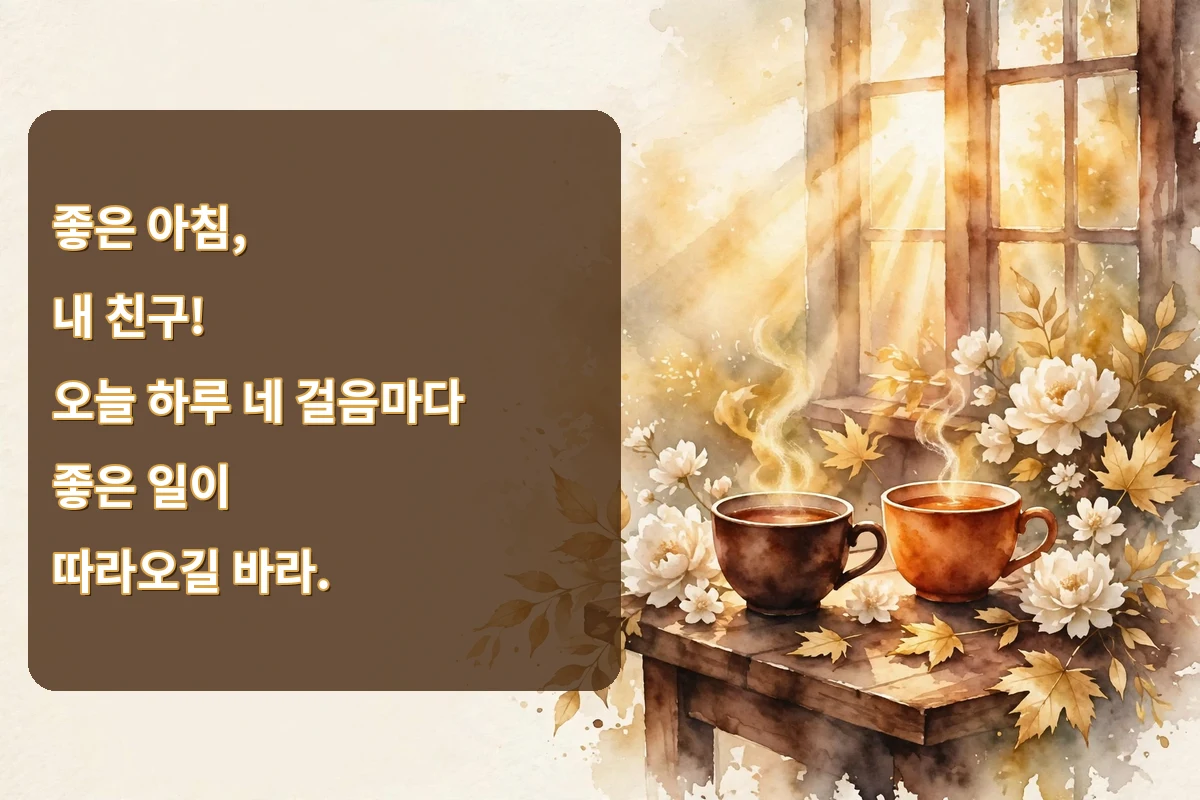
- 좋은 아침, 내 친구! 오늘 하루 네 걸음마다 좋은 일이 따라오길 바라. (Joeun achim, nae chingu! Oneul haru ne georeummada joeun iri ttaraogil bara.) (Good morning, my friend! May good things follow every step you take today.)
- 좋은 아침! 어젯밤 잠은 잘 잤어? 오늘은 푹 쉰 몸으로 가볍게 시작하길 바라. (Joeun achim! Eojetbam jameun jal jasseo? Oneureun puk swin momeuro gabyeopge sijakhagil bara.) (Good morning! Did you sleep well last night? May you start light today, with a body that rested well.)
- 좋은 아침, 친구야! 오늘 커피 한 잔의 여유와 웃을 일이 너에게 꼭 있길 바라. (Joeun achim, chinguya! Oneul keopi han jan-ui yeoyuwa useul iri neoege kkok itgil bara.) (Good morning, friend! May you surely have a relaxed cup of coffee and something to laugh about today.)
- 좋은 아침! 오늘 네가 하는 일마다 손이 잘 풀리고 마음이 놓이길 바라. (Joeun achim! Oneul nega haneun ilmada soni jal pulligo maeumi noigil bara.) (Good morning! May the work in your hands go smoothly today and your heart be at ease.)
- 좋은 아침, 오랜 친구! 멀리 있어도 오늘 아침 내 응원이 네 곁에 닿길 바라. (Joeun achim, oraen chingu! Meolli isseodo oneul achim nae eungwoni ne gyeote dakil bara.) (Good morning, old friend! Even from far away, may my support reach your side this morning.)
- 좋은 아침! 오늘은 걱정보다 웃음이 먼저 찾아오는 하루가 되길 바라. (Joeun achim! Oneureun geokjeongboda useumi meonjeo chajaoneun haruga doegil bara.) (Good morning! May today be a day when laughter finds you before worry does.)
- 좋은 아침, 내 친구! 오늘 네 노력에 맞는 좋은 소식이 꼭 오길 바라. (Joeun achim, nae chingu! Oneul ne noryeoge matneun joeun sosigi kkok ogil bara.) (Good morning, my friend! May good news that matches your effort surely come today.)
- 좋은 아침! 오늘 하루 네 마음이 맑고, 만나는 사람마다 너에게 다정하길 바라. (Joeun achim! Oneul haru ne maeumi malgo, mannaneun sarammada neoege dajeonghagil bara.) (Good morning! May your heart be clear today, and may every person you meet be kind to you.)
Morning blessings in Korean for someone you love
The first message of the day often goes to the person you love. Korean love words in these lines are warm ones: saranghaneun saram (the person I love), nae sarang (my love) and sojunghan saram (precious one), with close-person speech throughout. Lines in this group wish a gentle start, kind people, and a safe road home.
- 좋은 아침, 사랑하는 사람. 잠에서 깬 네 얼굴에 오늘 첫 햇살이 따뜻하게 닿길 바라. (Joeun achim, saranghaneun saram. Jameseo kkaen ne eolgure oneul cheot haetsari ttatteuthage dakil bara.) (Good morning, my love. May the first sunlight of today touch your waking face warmly.)
- 좋은 아침! 오늘 하루 네가 어디에 있든 내 마음이 함께한다는 걸 기억해 줘. (Joeun achim! Oneul haru nega eodie itdeun nae maeumi hamkkehandaneun geol gieokae jwo.) (Good morning! Wherever you are today, please remember that my heart is with you.)
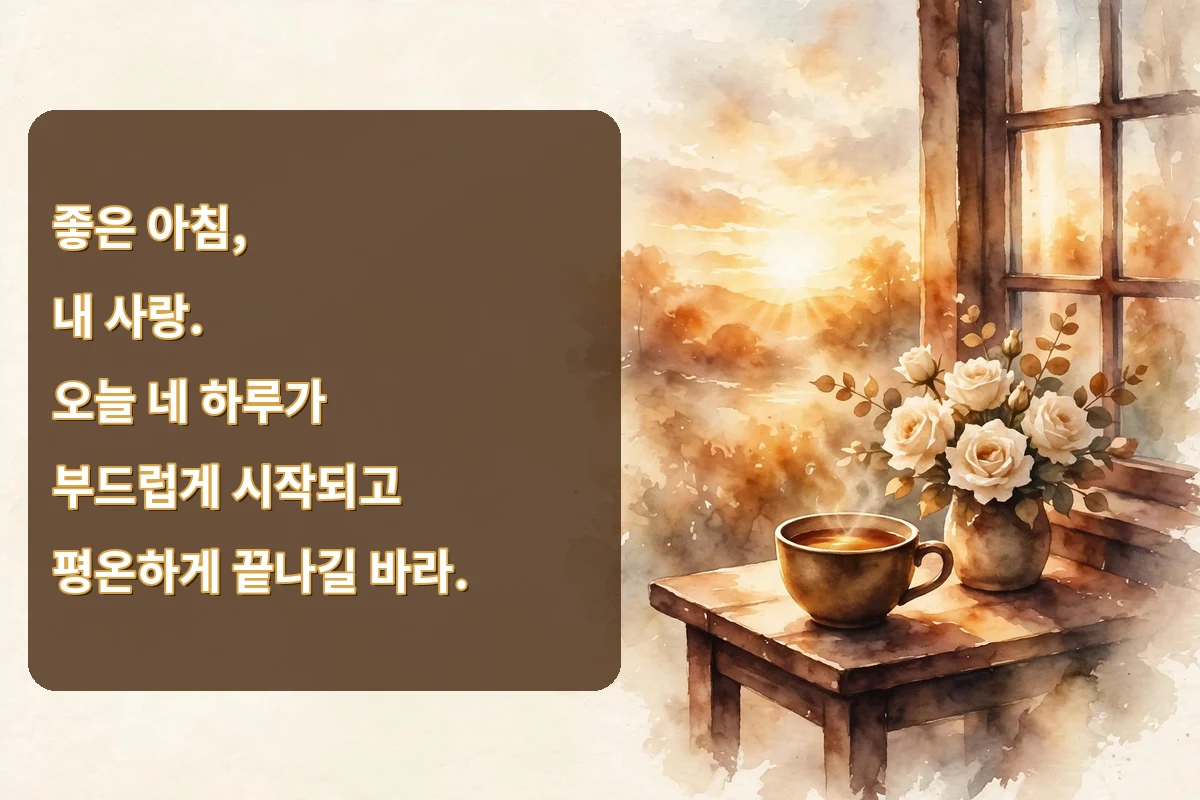
- 좋은 아침, 내 사랑. 오늘 네 하루가 부드럽게 시작되고 평온하게 끝나길 바라. (Joeun achim, nae sarang. Oneul ne haruga budeureopge sijakdoego pyeongonhage kkeunnagil bara.) (Good morning, my love. May your day begin gently and end in calm.)
- 좋은 아침! 오늘도 네 웃는 얼굴을 떠올리며 내 하루를 시작해. 네 하루도 웃음으로 가득하길 바라. (Joeun achim! Oneuldo ne unneun eolgureul tteoollimyeo nae harureul sijakae. Ne harudo useumeuro gadeukhagil bara.) (Good morning! I start my day again today picturing your smiling face. May your day be full of smiles too.)
- 좋은 아침, 소중한 사람. 오늘 네가 하는 모든 일에 하나님의 축복이 함께하길 바라. (Joeun achim, sojunghan saram. Oneul nega haneun modeun ire Hananim-ui chukbogi hamkkehagil bara.) (Good morning, precious one. May God's blessing be with everything you do today.)
- 좋은 아침! 어제보다 오늘, 오늘보다 내일 더 사랑해. 오늘 하루도 건강하고 행복하길 바라. (Joeun achim! Eojeboda oneul, oneulboda naeil deo saranghae. Oneul harudo geonganghago haengbokagil bara.) (Good morning! I love you more today than yesterday, and more tomorrow than today. May you be healthy and happy today too.)
- 좋은 아침, 사랑하는 사람. 오늘 아침 식사는 꼭 챙겨 먹고, 따뜻한 차 한 잔으로 하루를 시작하길 바라. (Joeun achim, saranghaneun saram. Oneul achim siksaneun kkok chaenggyeo meokgo, ttatteuthan cha han janeuro harureul sijakhagil bara.) (Good morning, my love. Please eat your breakfast today, and start the day with a warm cup of tea.)
- 좋은 아침! 오늘 밤 다시 만날 때까지, 네 하루가 안전하고 기쁨으로 가득하길 바라. (Joeun achim! Oneul bam dasi mannal ttaekkaji, ne haruga anjeonhago gippeumeuro gadeukhagil bara.) (Good morning! Until we meet again tonight, may your day be safe and full of joy.)
Morning blessings in Korean for loved ones far away
Loved ones far away wake in a different town, and a line in their own language crosses the miles with a piece of home inside it. One line in this group names sicha, the time difference, because a dawn send can land in another hour of their day. Lines in this group fit family in another city, a friend who moved this year, and a partner away for work.
- 좋은 아침이에요. 멀리 떨어져 있어도 오늘 아침 제 마음은 당신 곁에 있어요. 그곳의 하루도 평안하기를 바라요. (Joeun achimieyo. Meolli tteoreojyeo isseodo oneul achim je maeumeun dangsin gyeote isseoyo. Geugos-ui harudo pyeonganhagireul barayo.) (Good morning. Even far apart, my heart is beside you this morning. May your day there be at peace too.)
- 좋은 아침이에요! 시차가 달라도 이 인사가 당신의 아침에 맞게 닿기를 바라요. 오늘 하루 건강하게 보내세요. (Joeun achimieyo! Sichaga dallado i insaga dangsin-ui achime matge dakireul barayo. Oneul haru geonganghage bonaeseyo.) (Good morning! Even with a time difference, may this greeting reach you right at your morning. Spend today in good health.)
- 좋은 아침이에요. 먼 곳의 아침 햇살이 당신에게도 따뜻하기를 바라요. 오늘 만나는 사람들이 당신에게 다정하기를 바라요. (Joeun achimieyo. Meon gos-ui achim haetsari dangsinegedo ttatteuthagireul barayo. Oneul mannaneun saramdeuri dangsinege dajeonghagireul barayo.) (Good morning. May the morning sun in that far place be warm to you too. May the people you meet today be kind to you.)
- 좋은 아침이에요! 보고 싶은 마음이 커지는 아침이에요. 오늘 하루 당신이 외롭지 않고 힘이 나기를 바라요. (Joeun achimieyo! Bogo sipeun maeumi keojineun achimieyo. Oneul haru dangsini oeropji anko himi nagireul barayo.) (Good morning! It is a morning when I miss you more. May you not feel alone today, and may you find strength.)
- 좋은 아침이에요. 거리는 멀어도 축복은 거리를 타지 않아요. 하나님의 보호가 오늘 당신 곁에 있기를 바라요. (Joeun achimieyo. Georineun meoreodo chukbogeun georireul taji anayo. Hananim-ui bohoga oneul dangsin gyeote itgireul barayo.) (Good morning. The distance is far, but a blessing does not travel by distance. May God's protection be beside you today.)
- 좋은 아침이에요! 그곳 날씨가 오늘 당신에게 순하기를 바라요. 따뜻하게 입고 하루를 시작하세요. (Joeun achimieyo! Geugot nalssiga oneul dangsinege sunhagireul barayo. Ttatteuthage ipgo harureul sijakaseyo.) (Good morning! May the weather there be gentle to you today. Dress warmly and start your day.)
- 좋은 아침이에요. 다시 만날 날을 세며 오늘 아침도 당신을 응원해요. 맡은 일을 잘 마치는 하루가 되기를 바라요. (Joeun achimieyo. Dasi mannal nareul semyeo oneul achimdo dangsineul eungwonhaeyo. Mateun ireul jal machineun haruga doegireul barayo.) (Good morning. Counting the days until we meet again, I cheer for you this morning too. May today be a day when you finish your work well.)
- 좋은 아침이에요! 먼 곳에서도 아침은 옵니다. 새 하루의 희망이 오늘 당신 마음에 닿기를 바라요. (Joeun achimieyo! Meon goseseodo achimeun omnida. Sae haru-ui huimangi oneul dangsin maeume dakireul barayo.) (Good morning! Morning comes even in far places. May the hope of a new day reach your heart today.)
Morning blessings in Korean for peace and hope
A morning can start loud inside the head: a full list, a wait for news, a worry that woke early. The Korean words for this wish are pyeongan (peace of heart) and huimang (hope). Lines in this group wish a calm mind first, then hope that holds till night.
- 좋은 아침입니다! 오늘 마음 깊은 곳에 잔잔한 평안이 자리 잡기를 바랍니다. (Joeun achimimnida! Oneul maeum gipeun gose janjanhan pyeongani jari japgireul baramnida.) (Good morning! May a quiet peace settle deep in your heart today.)
- 좋은 아침입니다! 기다리는 소식이 있는 아침이라면, 희망이 마음을 먼저 채우기를 바랍니다. (Joeun achimimnida! Gidarineun sosigi inneun achimiramyeon, huimangi maeumeul meonjeo chaeugireul baramnida.) (Good morning! If this is a morning of waiting for news, may hope fill your heart first.)
- 좋은 아침입니다! 어제의 무거운 마음이 밤 사이에 가벼워졌기를 바랍니다. 오늘은 평온한 하루이기를 바랍니다. (Joeun achimimnida! Eoje-ui mugeoun maeumi bam saie gabyeowojyeotgireul baramnida. Oneureun pyeongonhan haruigireul baramnida.) (Good morning! May the heavy heart of yesterday have grown lighter in the night. May today be a calm day.)
- 좋은 아침입니다! 오늘 하루 숨을 고를 시간이 당신에게 꼭 있기를 바랍니다. 마음이 쉬는 하루가 되기를 바랍니다. (Joeun achimimnida! Oneul haru sumeul goreul sigani dangsinege kkok itgireul baramnida. Maeumi swineun haruga doegireul baramnida.) (Good morning! May you surely have time to catch your breath today. May it be a day when your heart rests.)
- 좋은 아침입니다! 하나님의 평안이 오늘 당신의 생각과 결정을 차분하게 이끌기를 바랍니다. (Joeun achimimnida! Hananim-ui pyeongani oneul dangsin-ui saenggakgwa gyeoljeongeul chabunhage ikkeulgireul baramnida.) (Good morning! May God's peace guide your thoughts and decisions calmly today.)
- 좋은 아침입니다! 오늘 작은 희망 하나가 마음에 심기고, 하루 종일 자라나기를 바랍니다. (Joeun achimimnida! Oneul jageun huimang hanaga maeume simgigo, haru jongil jaranagireul baramnida.) (Good morning! May one small hope be planted in your heart today and grow all day long.)
- 좋은 아침입니다! 시끄러운 하루 한가운데서도 마음의 고요를 잃지 않기를 바랍니다. (Joeun achimimnida! Sikkeureoun haru hangaundeseodo maeum-ui goyoreul ilchi ankireul baramnida.) (Good morning! Even in the middle of a loud day, may you keep the quiet in your heart.)
- 좋은 아침입니다! 오늘 아침의 빛이 어두웠던 마음 구석구석까지 닿기를 바랍니다. (Joeun achimimnida! Oneul achim-ui bichi eoduwotdeon maeum guseokguseokkkaji dakireul baramnida.) (Good morning! May the light of this morning reach every corner of a heart that felt dark.)
Morning blessings in Korean for strength and encouragement
A new day can ask a lot in its first hour: a big task, an exam, a first day in a new job. The Korean word is him (strength), with yonggi (courage) beside it. Lines in this group wish energy, courage, and steady hands for the work ahead.
- 좋은 아침입니다! 오늘 큰일을 앞둔 당신에게 흔들리지 않는 힘이 함께하기를 바랍니다. (Joeun achimimnida! Oneul keunireul apdun dangsinege heundeulliji anneun himi hamkkehagireul baramnida.) (Good morning! For you who face a big task today, may steady strength be with you.)
- 좋은 아침입니다! 처음 해 보는 일 앞에서도 용기가 마음에 차오르기를 바랍니다. (Joeun achimimnida! Cheoeum hae boneun il apeseodo yonggiga maeume chaoreugireul baramnida.) (Good morning! Even in front of a task you try for the first time, may courage rise in your heart.)
- 좋은 아침입니다! 오늘 한 걸음이 작아 보여도, 그 걸음이 당신을 앞으로 데려가기를 바랍니다. (Joeun achimimnida! Oneul han georeumi jaga boyeodo, geu georeumi dangsineul apeuro deryeogagireul baramnida.) (Good morning! Even if today's step looks small, may that step carry you forward.)
- 좋은 아침입니다! 지친 몸에 새 기운이, 지친 마음에 새 결심이 오늘 아침 채워지기를 바랍니다. (Joeun achimimnida! Jichin mome sae giuni, jichin maeume sae gyeolsimi oneul achim chaewojigireul baramnida.) (Good morning! May a tired body be filled with new energy this morning, and a tired heart with new resolve.)
- 좋은 아침입니다! 시험을 앞둔 당신, 외운 것이 차분히 떠오르고 손이 떨리지 않기를 바랍니다. (Joeun achimimnida! Siheomeul apdun dangsin, oeun geosi chabunhi tteooreugo soni tteolliji ankireul baramnida.) (Good morning! For you who face an exam, may what you studied come back calmly, and may your hand stay steady.)
- 좋은 아침입니다! 오늘 포기하고 싶은 순간이 와도, 처음 시작한 이유가 마음을 붙잡아 주기를 바랍니다. (Joeun achimimnida! Oneul pogihago sipeun sungani wado, cheoeum sijakan iyuga maeumeul butjaba jugireul baramnida.) (Good morning! Even if a moment comes today when you want to give up, may the reason you first started hold your heart.)
- 좋은 아침입니다! 당신의 노력이 오늘 눈에 보이는 열매로 이어지기를 바랍니다. 힘내세요. (Joeun achimimnida! Dangsin-ui noryeogi oneul nune boineun yeolmaero ieojigireul baramnida. Himnaeseyo.) (Good morning! May your effort lead to fruit you can see today. Take heart.)
- 좋은 아침입니다! 오늘 하루 당신이 생각보다 강하다는 것을 스스로 알게 되기를 바랍니다. (Joeun achimimnida! Oneul haru dangsini saenggakboda ganghadaneun geoseul seuseuro alge doegireul baramnida.) (Good morning! May today show you that you are stronger than you think.)
Morning blessings in Korean for protection and guidance
A protection line wishes the person safe on every road of the day. The Korean words are boho (protection) and indo (guidance), with jihye (wisdom) for the day's choices. Lines in this group fit a person who travels, a child on the school road, and anyone who starts the day far from home.
- 좋은 아침입니다! 오늘 나가는 길과 돌아오는 길 모두 하나님의 보호 아래 있기를 바랍니다. (Joeun achimimnida! Oneul naganeun gilgwa doraoneun gil modu Hananim-ui boho arae itgireul baramnida.) (Good morning! May both the road out and the road back be under God's protection today.)
- 좋은 아침입니다! 운전하는 길에서는 차분한 눈과 안전한 거리가 당신과 함께하기를 바랍니다. (Joeun achimimnida! Unjeonhaneun gireseoneun chabunhan nungwa anjeonhan georiga dangsingwa hamkkehagireul baramnida.) (Good morning! On a driving road, may calm eyes and a safe distance be with you.)
- 좋은 아침입니다! 오늘 내리는 결정마다 맑은 판단이 함께하고, 잘못된 길은 일찍 알아차리기를 바랍니다. (Joeun achimimnida! Oneul naerineun gyeoljeongmada malgeun pandani hamkkehago, jalmotdoen gireun iljjik aracharigireul baramnida.) (Good morning! May clear judgment be with every decision you make today, and may you notice a wrong road early.)
- 좋은 아침입니다! 낯선 곳으로 떠나는 당신, 길에서 만나는 사람들이 다정하고 여정이 무사하기를 바랍니다. (Joeun achimimnida! Natseon goseuro tteonaneun dangsin, gireseo mannaneun saramdeuri dajeonghago yeojeongi musahagireul baramnida.) (Good morning! For you who leave for an unfamiliar place, may the people you meet on the road be kind, and may the journey be safe.)
- 좋은 아침입니다! 오늘 집을 지키는 손길과 나가는 발걸음 모두 평안 속에 있기를 바랍니다. (Joeun achimimnida! Oneul jibeul jikineun songilgwa naganeun balgeoreum modu pyeongan soge itgireul baramnida.) (Good morning! May both the hands that keep the home and the steps that go out be in peace today.)
- 좋은 아침입니다! 마음이 흔들리는 순간, 바른 방향을 가리키는 조용한 확신이 함께하기를 바랍니다. (Joeun achimimnida! Maeumi heundeullineun sungan, bareun banghyangeul garikineun joyonghan hwaksini hamkkehagireul baramnida.) (Good morning! In a moment when your heart wavers, may a quiet certainty that points the right way be with you.)
- 좋은 아침입니다! 오늘 위험한 일은 당신 곁을 비켜 가고, 안전한 자리에 머물게 되기를 바랍니다. (Joeun achimimnida! Oneul wiheomhan ireun dangsin gyeoteul bikyeo gago, anjeonhan jarie meomulge doegireul baramnida.) (Good morning! May dangerous things pass by you today, and may you stay in a safe place.)
- 좋은 아침입니다! 하나님의 인도가 오늘 당신의 계획보다 앞서가고, 그 뒤를 평안히 따르게 되기를 바랍니다. (Joeun achimimnida! Hananim-ui indoga oneul dangsin-ui gyehoekboda apseogago, geu dwireul pyeonganhi ttareuge doegireul baramnida.) (Good morning! May God's guidance go ahead of your plans today, and may you follow behind it in peace.)
Morning blessings in Korean for a new day
A new day line greets the day itself: first light, a clean start, new chances. The Korean phrase is sae haru, and these lines use it with hope for the hours ahead. Open this group on a first day, a fresh start, or a plain morning that needs a bright first word.
- 좋은 아침입니다! 새 하루는 새 시작입니다. 어제의 아쉬움은 어제에 두고 가볍게 출발하기를 바랍니다. (Joeun achimimnida! Sae haruneun sae sijagimnida. Eoje-ui aswiumeun eoje-e dugo gabyeopge chulbalhagireul baramnida.) (Good morning! A new day is a new start. Leave yesterday's regrets in yesterday, and set out lightly.)
- 좋은 아침입니다! 오늘 처음 해 보는 작은 일 하나가 하루를 새롭게 열기를 바랍니다. (Joeun achimimnida! Oneul cheoeum hae boneun jageun il hanaga harureul saeropge yeolgireul baramnida.) (Good morning! May one small thing you try for the first time today open the day in a new way.)
- 좋은 아침입니다! 새벽의 맑은 공기가 어제의 피로를 씻어 내고, 새 기운으로 채워 주기를 바랍니다. (Joeun achimimnida! Saebyeog-ui malgeun gonggiga eoje-ui piroreul ssiseo naego, sae giuneuro chaewo jugireul baramnida.) (Good morning! May the clear dawn air wash away yesterday's tiredness and fill you with new energy.)
- 좋은 아침입니다! 오늘은 새로운 습관의 첫날이 될 수 있습니다. 작은 약속 하나를 지키는 하루가 되기를 바랍니다. (Joeun achimimnida! Oneureun saeroun seupgwan-ui cheonnari doel su itseumnida. Jageun yaksok hanareul jikineun haruga doegireul baramnida.) (Good morning! Today can be the first day of a new habit. May it be a day when you keep one small promise.)
- 좋은 아침입니다! 새 하루의 빈 첫 페이지에 오늘은 좋은 문장이 적히기를 바랍니다. (Joeun achimimnida! Sae haru-ui bin cheot peijie oneureun joeun munjangi jeokigireul baramnida.) (Good morning! On the blank first page of the new day, may a good sentence be written today.)
- 좋은 아침입니다! 오늘 만나는 첫 사람이 당신에게 좋은 시작을 열어 주기를 바랍니다. (Joeun achimimnida! Oneul mannaneun cheot sarami dangsinege joeun sijageul yeoreo jugireul baramnida.) (Good morning! May the first person you meet today open a good start for you.)
- 좋은 아침입니다! 새 아침의 빛처럼 마음도 새롭게 밝아지는 하루가 되기를 바랍니다. (Joeun achimimnida! Sae achim-ui bitcheoreom maeumdo saeropge balkajineun haruga doegireul baramnida.) (Good morning! May it be a day when your heart grows newly bright, like the light of a new morning.)
- 좋은 아침입니다! 하나님의 은혜가 오늘도 새롭습니다. 그 은혜 안에서 하루를 시작하기를 바랍니다. (Joeun achimimnida! Hananim-ui eunhyega oneuldo saeropseumnida. Geu eunhye aneseo harureul sijakhagireul baramnida.) (Good morning! God's grace is new again today. May you start the day inside that grace.)
Morning blessings in Korean with gratitude
A gratitude line names the gifts of one plain morning: light, breath, food, home, and the people at the table. The Korean word is gamsa (gratitude), and the thank-you word is gamsahamnida. Lines in this group fit any person and pair well with a family send.
- 좋은 아침입니다! 오늘 아침 눈을 뜰 수 있음에 감사하는 마음으로 하루가 시작되기를 바랍니다. (Joeun achimimnida! Oneul achim nuneul tteul su isseume gamsahaneun maeumeuro haruga sijakdoegireul baramnida.) (Good morning! May the day begin with a heart thankful for opening your eyes this morning.)
- 좋은 아침입니다! 곁에 있는 사람들의 이름을 하나씩 떠올리며 감사하는 아침이 되기를 바랍니다. (Joeun achimimnida! Gyeote inneun saramdeuri ireumeul hanassik tteoollimyeo gamsahaneun achimi doegireul baramnida.) (Good morning! May it be a morning of gratitude, as you picture the names of the people beside you, one by one.)
- 좋은 아침입니다! 오늘 식탁의 음식과 따뜻한 차 한 잔에도 감사가 머무는 하루가 되기를 바랍니다. (Joeun achimimnida! Oneul siktag-ui eumsikgwa ttatteuthan cha han janedo gamsaga meomuneun haruga doegireul baramnida.) (Good morning! May it be a day when gratitude stays even in the food on the table and a warm cup of tea.)
- 좋은 아침입니다! 어제 받은 작은 도움 하나를 오늘 아침 다시 기억하고 감사하게 되기를 바랍니다. (Joeun achimimnida! Eoje badeun jageun doum hanareul oneul achim dasi gieokago gamsahage doegireul baramnida.) (Good morning! May you remember again this morning one small help you received yesterday, and feel thankful.)
- 좋은 아침입니다! 하나님의 은혜를 세어 보는 아침, 세다 보면 마음이 먼저 차오르기를 바랍니다. (Joeun achimimnida! Hananim-ui eunhyereul seeo boneun achim, seda bomyeon maeumi meonjeo chaoreugireul baramnida.) (Good morning! On a morning of counting God's grace, may your heart fill first as you count.)
- 좋은 아침입니다! 오늘 감사하다는 말을 아끼지 않고 건네는 하루가 되기를 바랍니다. (Joeun achimimnida! Oneul gamsahadaneun mareul akkiji anko geonneneun haruga doegireul baramnida.) (Good morning! May today be a day when you hand over the words "thank you" without holding them back.)
- 좋은 아침입니다! 평범한 아침이 사실은 큰 선물임을 알고, 그 선물에 감사하는 하루가 되기를 바랍니다. (Joeun achimimnida! Pyeongbeomhan achimi sasireun keun seonmurimeul algo, geu seonmure gamsahaneun haruga doegireul baramnida.) (Good morning! May it be a day when you know that an ordinary morning is in fact a big gift, and give thanks for that gift.)
- 좋은 아침입니다! 오늘 하루의 끝에서 감사할 일을 세 가지는 꼭 찾게 되기를 바랍니다. (Joeun achimimnida! Oneul haru-ui kkeuteseo gamsahal ireul se gajineun kkok chatge doegireul baramnida.) (Good morning! At the end of today, may you surely find three things to be thankful for.)
Morning blessings in Korean for good health
A health line wishes the body well for the day ahead. The Korean word is geongang (health), a warm wish word in a morning line. Lines in this group fit an older parent, a person who woke up weak, and anyone in a sick week.
- 좋은 아침입니다! 오늘 몸이 가볍고, 깊은 잠의 기운이 아침까지 이어지기를 바랍니다. (Joeun achimimnida! Oneul momi gabyeopgo, gipeun jam-ui giuni achimkkaji ieojigireul baramnida.) (Good morning! May your body feel light today, and may the energy of deep sleep carry into the morning.)
- 좋은 아침입니다! 아픈 곳이 있는 아침이라면, 오늘은 통증이 한결 가벼워지는 하루가 되기를 바랍니다. (Joeun achimimnida! Apeun gosi inneun achimiramyeon, oneureun tongjeungi hangyeol gabyeowojineun haruga doegireul baramnida.) (Good morning! If this is a morning with a place that hurts, may today be a day when the pain grows much lighter.)
- 좋은 아침입니다! 오늘 따뜻한 물 한 잔과 든든한 아침 식사가 몸에 힘이 되기를 바랍니다. (Joeun achimimnida! Oneul ttatteuthan mul han jangwa deundeunhan achim siksaga mome himi doegireul baramnida.) (Good morning! May a warm glass of water and a solid breakfast give your body strength today.)
- 좋은 아침입니다! 회복 중인 당신, 오늘은 어제보다 한 뼘 더 나아지는 하루가 되기를 바랍니다. (Joeun achimimnida! Hoebok jungin dangsin, oneureun eojeboda han ppyeom deo naajineun haruga doegireul baramnida.) (Good morning! For you who are recovering, may today be a day when you are a span better than yesterday.)
- 좋은 아침입니다! 오늘 눈과 어깨의 피로가 풀리고, 몸 곳곳이 편안하기를 바랍니다. (Joeun achimimnida! Oneul nungwa eokkae-ui piroga pulligo, mom gotgosi pyeonanhagireul baramnida.) (Good morning! May the tiredness in your eyes and shoulders loosen today, and may your whole body be at ease.)
- 좋은 아침입니다! 하나님의 손길이 오늘 당신의 몸과 마음을 어루만져 건강을 회복시켜 주기를 바랍니다. (Joeun achimimnida! Hananim-ui songiri oneul dangsin-ui momgwa maeumeul eorumanjyeo geongangeul hoeboksikyeo jugireul baramnida.) (Good morning! May God's hand touch your body and heart today and restore your health.)
- 좋은 아침입니다! 오늘 가벼운 산책 한 번이 몸에 활력을, 마음에 맑음을 가져다주기를 바랍니다. (Joeun achimimnida! Oneul gabyeoun sanchaek han beoni mome hwallyeogeul, maeume malgeumeul gajyeodajugireul baramnida.) (Good morning! May one light walk today bring energy to your body and clearness to your heart.)
- 좋은 아침입니다! 오늘도 무리하지 않는 범위에서, 몸이 허락하는 만큼만 움직이는 지혜가 함께하기를 바랍니다. (Joeun achimimnida! Oneuldo murihaji anneun beomwieseo, momi heorakaneun mankeumman umjigineun jihyega hamkkehagireul baramnida.) (Good morning! Today too, may wisdom be with you, to move only as much as your body allows, without overdoing it.)
Morning blessings in Korean for work and success
A work line wishes a fair day at the desk, in the shop, or on the road. The Korean words are il (work), yeolmae (fruit, a result) and gihoe (a chance). Lines in this group fit a spouse on a big work day, a friend with a result due, and a workmate at the start of a shift.
- 좋은 아침입니다! 오늘 중요한 회의를 앞둔 당신, 말이 차분히 정리되어 잘 전달되기를 바랍니다. (Joeun achimimnida! Oneul jungyohan hoeuireul apdun dangsin, mari chabunhi jeongnidoeeo jal jeondaldoegireul baramnida.) (Good morning! For you who face an important meeting today, may your words be calmly in order and land well.)
- 좋은 아침입니다! 오늘 결과 발표를 기다리는 당신에게 기다린 보람이 있는 소식이 오기를 바랍니다. (Joeun achimimnida! Oneul gyeolgwa balpyoreul gidarineun dangsinege gidarin borami inneun sosigi ogireul baramnida.) (Good morning! For you who wait for a result today, may news come that makes the waiting worth it.)
- 좋은 아침입니다! 오늘 출근길이 막히지 않고, 첫 업무가 순조롭게 풀리기를 바랍니다. (Joeun achimimnida! Oneul chulgeungiri makiji anko, cheot eommuga sunjoropge pulligireul baramnida.) (Good morning! May the road to work be clear today, and may the first task of the day go smoothly.)
- 좋은 아침입니다! 가게 문을 여는 당신, 오늘은 반가운 손님들이 많이 찾아오기를 바랍니다. (Joeun achimimnida! Gage muneul yeoneun dangsin, oneureun bangaun sonnimdeuri mani chajaogireul baramnida.) (Good morning! For you who open a shop, may many welcome customers visit today.)
- 좋은 아침입니다! 오늘 동료들과의 협력이 부드럽게 이어지고, 서로의 노력이 인정받기를 바랍니다. (Joeun achimimnida! Oneul dongnyodeulgwaui hyeomnyeogi budeureopge ieojigo, seoro-ui noryeogi injeongbatgireul baramnida.) (Good morning! May teamwork with your colleagues flow smoothly today, and may each other's effort be recognized.)
- 좋은 아침입니다! 하나님의 지혜가 오늘 당신의 일터에 함께하여, 어려운 문제의 실마리가 풀리기를 바랍니다. (Joeun achimimnida! Hananim-ui jihyega oneul dangsin-ui ilteoe hamkkehayeo, eoryeoun munje-ui silmariga pulligireul baramnida.) (Good morning! May God's wisdom be at your workplace today, and may the thread of a hard problem come loose.)
- 좋은 아침입니다! 오늘 마감이 있는 당신, 시간 안에 차분히 끝내고 가벼운 마음으로 퇴근하기를 바랍니다. (Joeun achimimnida! Oneul magami inneun dangsin, sigan ane chabunhi kkeunnaego gabyeoun maeumeuro toegeunhagireul baramnida.) (Good morning! For you who have a deadline today, may you finish calmly in time and leave work with a light heart.)
- 좋은 아침입니다! 오늘 하루의 수고가 내일의 기회로 이어지는 복된 하루가 되기를 바랍니다. (Joeun achimimnida! Oneul haru-ui sugoga naeir-ui gihoero ieojineun bokdoen haruga doegireul baramnida.) (Good morning! May today's hard work lead to tomorrow's chance, in a blessed day.)
Morning blessings in Korean on a hard morning
A hard morning starts heavy: worry at dawn, a wait for news, a tired heart at the table. A Korean line for that morning stays soft and firm, and names one small calm thing first. Lines in this group fit a family member, a friend, or your own first read of the day.
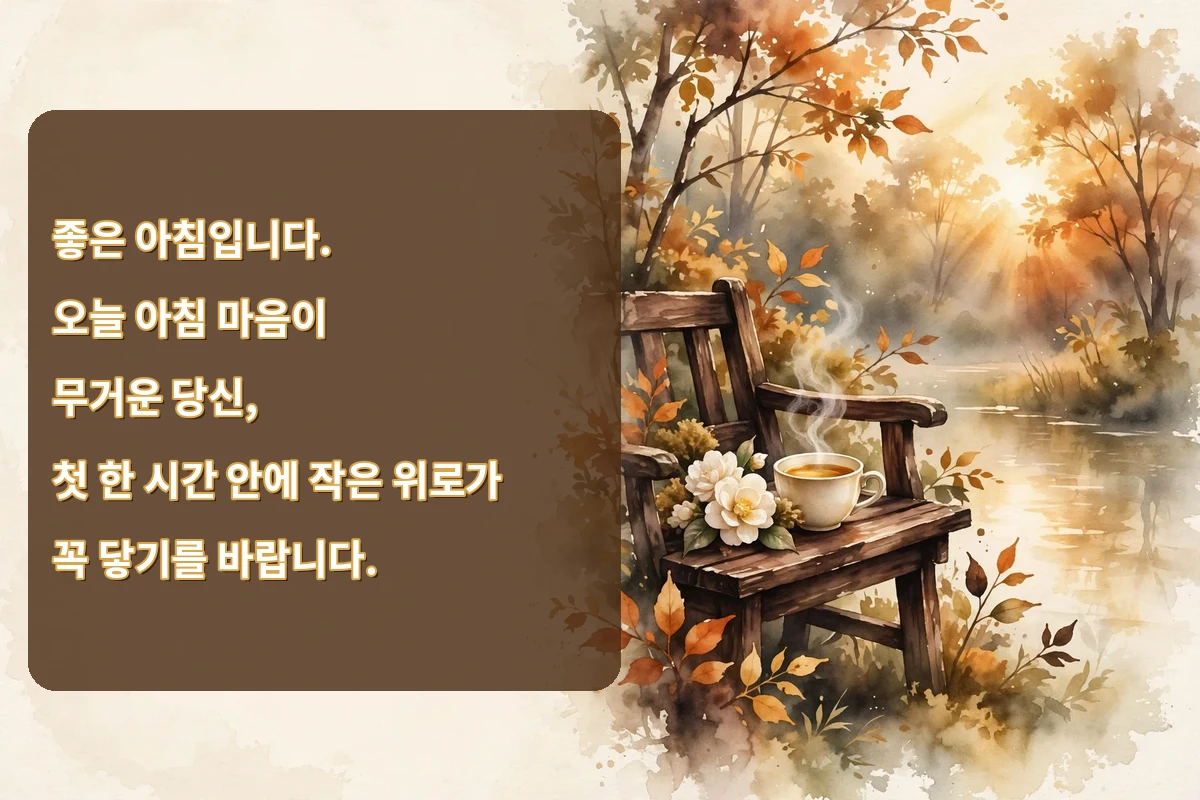
- 좋은 아침입니다. 오늘 아침 마음이 무거운 당신, 첫 한 시간 안에 작은 위로 하나가 꼭 닿기를 바랍니다. (Joeun achimimnida. Oneul achim maeumi mugeoun dangsin, cheot han sigan ane jageun wiro hanaga kkok dakireul baramnida.) (Good morning. For you whose heart is heavy this morning, may one small comfort surely reach you in the first hour.)
- 좋은 아침입니다. 나쁜 소식을 들은 다음 날 아침, 오늘은 마음을 추스를 시간이 충분히 있기를 바랍니다. (Joeun achimimnida. Nappeun sosigeul deureun daeum nal achim, oneureun maeumeul chuseureul sigani chungbunhi itgireul baramnida.) (Good morning. On the morning after bad news, may you have enough time today to gather your heart.)
- 좋은 아침입니다. 울고 싶은 아침이라면 울어도 괜찮습니다. 눈물 뒤에 마음이 한결 가벼워지기를 바랍니다. (Joeun achimimnida. Ulgo sipeun achimiramyeon ureodo gwaenchanseumnida. Nunmul dwie maeumi hangyeol gabyeowojigireul baramnida.) (Good morning. If this is a morning when you want to cry, it is all right to cry. May your heart feel much lighter after the tears.)
- 좋은 아침입니다. 오늘 할 일이 산더미처럼 보여도, 첫 한 가지만 천천히 시작하면 되기를 바랍니다. (Joeun achimimnida. Oneul hal iri sandeomicheoreom boyeodo, cheot han gajiman cheoncheonhi sijakamyeon doegireul baramnida.) (Good morning. Even if today's work looks like a mountain, may you need only to start the first one thing, slowly.)
- 좋은 아침입니다. 하나님의 위로가 오늘 아침 당신의 방 안까지 조용히 들어와 머물기를 바랍니다. (Joeun achimimnida. Hananim-ui wiroga oneul achim dangsin-ui bang ankkaji joyonghi deureowa meomulgireul baramnida.) (Good morning. May God's comfort come quietly into your room this morning and stay.)
- 좋은 아침입니다. 지쳐서 일어나기 힘든 아침, 오늘은 누군가의 다정한 말 한마디가 당신을 일으켜 주기를 바랍니다. (Joeun achimimnida. Jichyeoseo ireonagi himdeun achim, oneureun nugungaui dajeonghan mal hanmadiga dangsineul ireukyeo jugireul baramnida.) (Good morning. On a morning when you are too tired to get up, may one kind word from someone lift you today.)
- 좋은 아침입니다. 실패한 다음 날 아침에도 하루는 다시 시작됩니다. 오늘 작은 성공 하나가 당신을 기다리기를 바랍니다. (Joeun achimimnida. Silpaehan daeum nal achimedo haruneun dasi sijakdoemnida. Oneul jageun seonggong hanaga dangsineul gidarigireul baramnida.) (Good morning. Even on the morning after a failure, the day starts again. May one small success wait for you today.)
- 좋은 아침입니다. 오늘 하루가 버겁게 느껴져도, 저녁에는 마음 놓고 쉴 수 있는 시간이 오기를 바랍니다. (Joeun achimimnida. Oneul haruga beogeopge neukkyeojyeodo, jeonyeogeneun maeum noko swil su inneun sigani ogireul baramnida.) (Good morning. Even if today feels like too much, may an evening come when you can rest with your heart at ease.)
How do you say morning blessings in Korean?
Korean has three morning greeting forms, set by speech level. Joeun achimimnida is the formal form, safe for every person and right for formal messages. Joeun achimieyo is the polite form most people use in daily life. Joeun achim is the casual form, used with close family, friends, children, and a partner. A blessing adds a wish to the greeting. The word is chukbok (blessing), and God's blessing is Hananim-ui chukbok. The table below gives the core phrases on this page, with the romanization and the English meaning. The romanization is the part to read aloud; the Korean spelling in the first column is the part to copy.
| Korean phrase | Romanization | English meaning |
|---|---|---|
| 좋은 아침입니다 | Joeun achimimnida | Good morning (formal form, safe for everyone) |
| 좋은 아침이에요 | Joeun achimieyo | Good morning (polite form, everyday use) |
| 좋은 아침 | Joeun achim | Good morning (casual form, close people) |
| 안녕하세요 | Annyeonghaseyo | Hello (polite, works at any hour of the day) |
| 안녕히 주무셨어요? | Annyeonghi jumusyeosseoyo? | Did you sleep well? (morning greeting for elders) |
| 하나님의 축복이 있기를 바랍니다 | Hananim-ui chukbogi itgireul baramnida | May God's blessing be with you |
| 평안한 하루 되세요 | Pyeonganhan haru doeseyo | Have a peaceful day |
| 건강하세요 | Geonganghaseyo | Stay healthy (a warm wish to an elder) |
Three wording points matter in Korean. First, the speech level: the lines on this page open with the formal greeting as the safe default. For an elder, a parent you address with respect, a boss, a teacher, or a customer, keep the formal or polite form in the line. For close family, a close friend, a child, or your partner, the casual Joeun achim is warm and right, and the friend and love groups on this page use it that way. Second, the elder custom: in Korea, a morning greeting to a parent or grandparent often asks if they slept well, Annyeonghi jumusyeosseoyo? A sender who adds that one question to an elder's line sounds like family. Third, the time window: the morning forms belong to the morning, and the polite Annyeonghaseyo works at any hour, so a send that lands later in the day still reads well with it; no switch is needed. The script on this page is Hangul, the Korean alphabet, and one line fits every reader, since Korean greetings carry no man or woman form. After a blessing line, a short follow-up fits well: Jal jinaeseyo? (How are you doing?) or Oneuldo joheun haru doeseyo (Have a good day today too).
How to pick one Korean blessing and send it in 30 seconds
Step 1: Name the person and check the speech level. An elder, a boss, a teacher, or a customer takes a line with the formal Joeun achimimnida. Close family, a close friend, a child, and your partner can take the casual Joeun achim lines, as the friend and love groups show.
Step 2: Open the group that matches the person and the day. Person groups sit first on this page, need groups after them. A hard morning takes the hard morning group, a big work day takes the work and success group.
Step 3: Check the romanization and the English meaning once. Each line gives both right after the Korean, so you send no line you have not checked. Then copy the Korean part only, up to the full stop before the romanization.
Step 4: Add the name at the start and send it before the person leaves home. A Korean line that lands at their dawn, in their own language, reads as care, and a name makes it land on the right person.
Two pages I read while building this list treat the Korean morning greeting as a lesson: the good morning in Korean guide on Preply lists 10 greetings in standard, formal and informal groups, and the good morning in Korean guide on italki lists 7 ways split by formality, with pronunciation lines. The lines here are blessings, each with its romanization and meaning checked, grouped by the person you send to. For the same kind of lines in Japanese, see Morning Blessings in Japanese.
| Person or need | What the day holds | Tone to pick |
|---|---|---|
| Any person | A plain morning | General group |
| A rushed send | No time to read groups | Short group |
| A close person | A milestone, a tender day | Heartfelt group |
| Family | Work and school on one day | Family group |
| A friend | A full day, poor sleep | Friend group |
| Someone you love | A big day, a soft start | Love group |
| Loved ones far away | Another town, another time zone | Far away group |
| Peace and hope | A tense week, a wait for news | Peace and hope group |
| Strength | A big task, an exam, a first day | Strength group |
| Protection | Travel, a long road, a new city | Protection group |
| A new day | A first day, a fresh start | New day group |
| Gratitude | Thanks is the whole message | Gratitude group |
| Good health | A sick week, a weak start | Health group |
| Work and success | A meeting, a result, a shift | Work group |
| A hard morning | Bad news, a heavy heart | Hard morning group |
FAQ
What is a good morning blessing in Korean?
A good morning blessing in Korean is a short Korean line that greets a person at dawn and wishes them well for the day. A warm example is: 좋은 아침입니다! 하나님의 축복이 당신의 하루를 가득 채우고, 마음에 평화가 있기를 바랍니다. (Joeun achimimnida! Hananim-ui chukbogi dangsin-ui harureul gadeuk chaeugo, maeume pyeonghwaga itgireul baramnida.) (Good morning! May God's blessing fill your day, and may peace be in your heart.) Each group on this page holds 8 lines of this kind, with the romanization and the English meaning after each line.
How do you say good morning in Korean?
Good morning in Korean is 좋은 아침입니다 (Joeun achimimnida) in the formal form, 좋은 아침이에요 (Joeun achimieyo) in the polite form for daily life, and 좋은 아침 (Joeun achim) in the casual form for close people. The formal and polite forms fit every person.
How do you say God bless you in Korean?
God bless you in Korean is: 하나님의 축복이 있기를 바랍니다 (Hananim-ui chukbogi itgireul baramnida). The word chukbok means blessing, and Hananim is the word for God in this warm form.
What is a short morning blessing in Korean?
A short morning blessing in Korean carries the wish in a few words. One line from the short group on this page is: 좋은 아침입니다! 하나님께서 당신의 하루를 축복해 주시기를 바랍니다. (Joeun achimimnida! Hananimkkeseo dangsin-ui harureul chukbokae jusigireul baramnida.) (Good morning! May God bless your day.) The short group holds 8 lines of this size, each ready to copy and send in one tap.
Is Joeun achim too casual for an elder or a boss?
Yes, for an elder, a boss, a teacher, or a customer, use the formal form Joeun achimimnida or the polite form Joeun achimieyo, and add the elder morning question Annyeonghi jumusyeosseoyo? (Did you sleep well?). The casual Joeun achim fits close family, close friends, children, and a partner. Most lines on this page use the formal form, and the guide above the pick guide states the rule once.
Can I send these Korean morning blessings to family and friends?
Yes. The family group and the friend group hold lines written for those sends, with respectful speech for parents and grandparents and close-person speech where a friend send uses it. Check the romanization and the English meaning after the line, copy the Korean part, add the name, and send it early.
Takeaway
- Each line gives the Korean wording first, then its romanization, then the English meaning. Check the meaning, then copy the Korean part only.
- 좋은 아침입니다 is the formal greeting for every person. 좋은 아침이에요 is the polite daily form. 좋은 아침 is the casual form for close family, friends, children, and a partner.
- A blessing adds chukbok (blessing) and a wish for the day. Hananim-ui chukbok is God's blessing.
- A morning send to an elder lands warm with one added question: Annyeonghi jumusyeosseoyo? (Did you sleep well?)
- Send the line at dawn, with the name at the start. A line in their own language lands as care.
Years of sending these lines to Korean-speaking friends taught me one clear rule: the speech level check is the whole job, with the meaning check beside it. A line can carry perfect Korean words and still miss the person, because it used the casual greeting for a grandfather or the plain greeting on a morning that needed a blessing. I keep these groups by person and by need for that reason, with the level note beside them. Pick the group that fits this dawn, check the romanization and the meaning once, add the name, and send it while the morning is still quiet. Your line may be the first kind word that person reads today, in the language of their own home.
